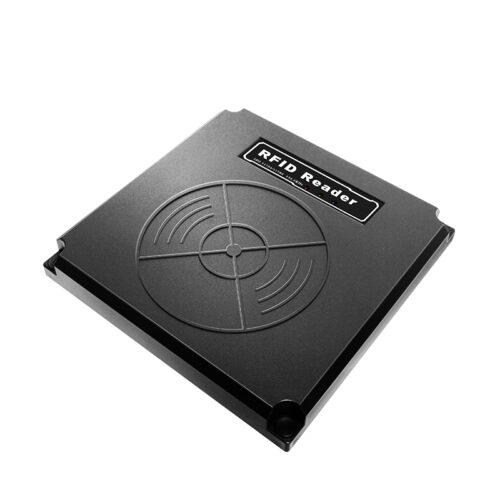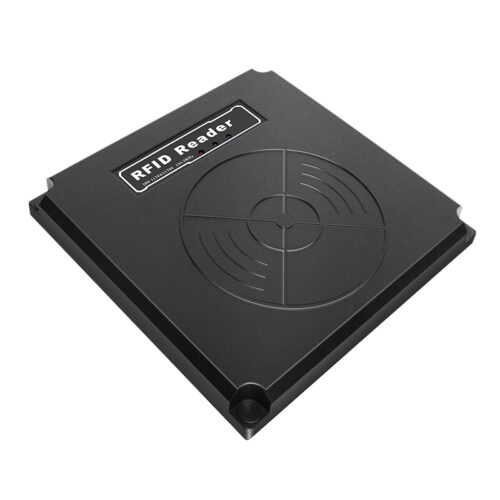






















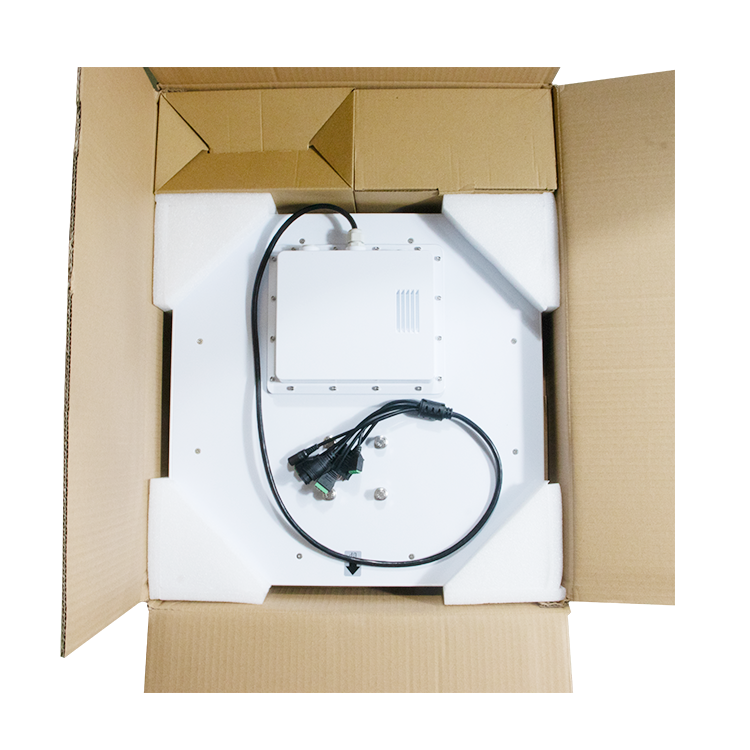
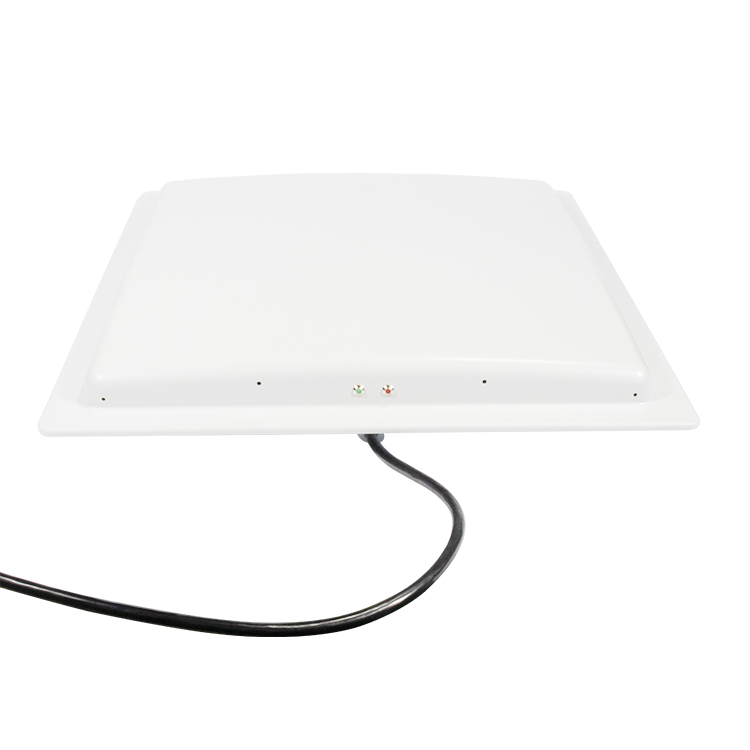
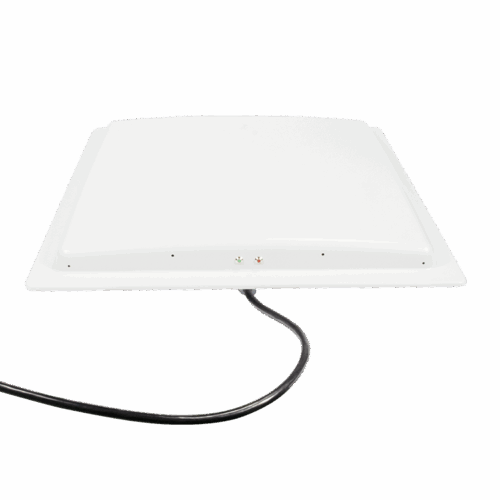
Integrated UHF RFID Reader for Long-Range Identification
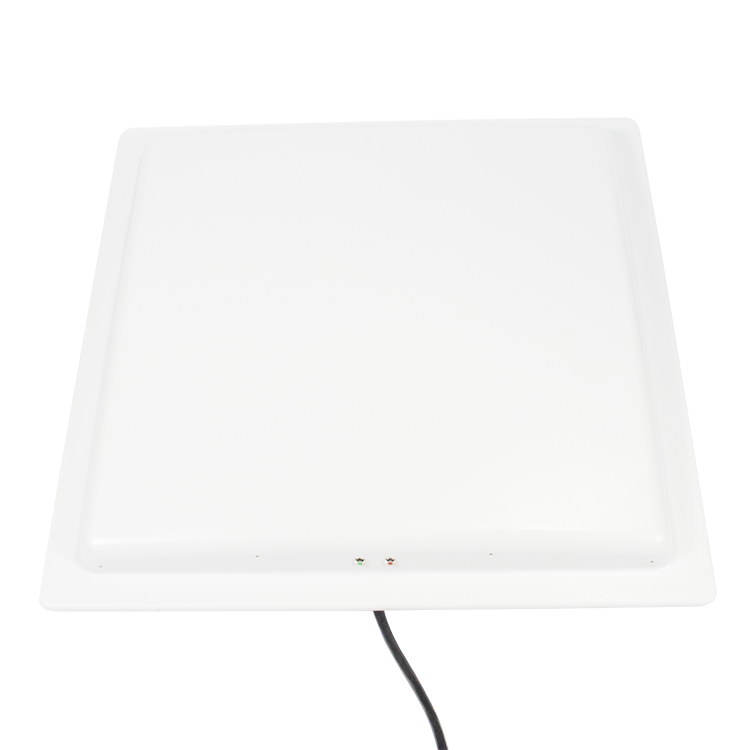
This fixed UHF reader is designed for applications that require a wider identification zone than conventional LF livestock readers.
The built-in 12 dBi antenna eliminates the need for a separate external antenna in many installations. Depending on the tag type, RF power, tag orientation, and environment, the reading distance can reach up to 20 meters.
Regional frequency configurations are available for different markets, including FCC, ETSI, GB, and Japan frequency bands.
Key Features and Technical Specifications
Key Features
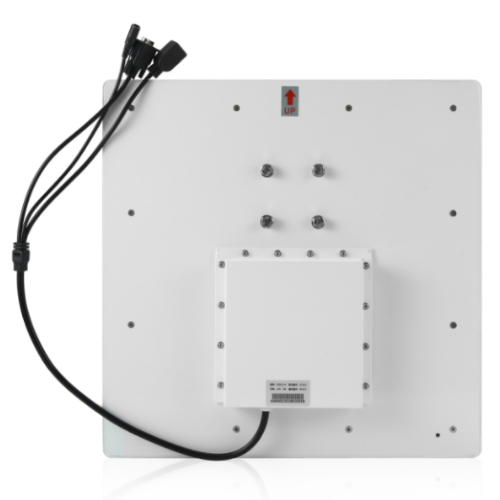
- Integrated UHF reader and 12 dBi antenna
- RF output power adjustable from 0 to 33 dBm
- Read distance up to 20 munder suitable conditions
- Supports EPC Class 1 Gen 2, ISO 18000-6C and ISO 18000-6B
- Impinj E710 RF chip or other optional configurations
- RS232, RS485, and RJ45 communication
- 2 optocoupler inputs and 2 relay outputs
- Supports fixed-frequency and frequency-hopping operation
- Dense-reader mode support
- RSSI signal-strength detection
- Online firmware upgrade support
- IP67enclosure for outdoor and livestock environments
- Wide operating temperature from -20°C to +75°C
Technical Specifications
| Feature | Specification |
| Product Type | Integrated UHF RFID Reader |
| Frequency – FCC | 902–928 MHz |
| Frequency – ETSI | 865–868 MHz |
| Frequency – GB | 920–925 MHz |
| Frequency – Japan | 916–920 MHz |
| Air Interface Protocol | EPC C1 Gen2, ISO 18000-6C / 6B |
| RF Chip | Impinj E710 or optional |
| RF Output Power | 0–33 dBm |
| Integrated Antenna Gain | 12 dBi |
| Reading Distance | Up to 20 m* |
| Ethernet | 10/100M adaptive |
| Serial Interfaces | RS232, RS485 |
| Network Interface | RJ45 |
| I/O | 2 optocoupler inputs, 2 relay outputs |
| Relay Capacity | DC 30V/1A, AC 125V/0.75A |
| RS232 Baud Rate | 9600, 19200, 115200 default; up to 460800 selectable |
| Power Supply | DC 5–24V |
| Power Consumption | Max. 10W at 33 dBm RF output |
| Operating Mode | Fixed frequency / Frequency hopping |
| Dimensions | 445 × 445 × 88 mm |
| Weight | 2.8 kg |
| Housing Material | ABS + aluminum alloy |
| Protection Rating | IP67 |
| Operating Temperature | -20°C to +75°C |
| Storage Temperature | -40°C to +85°C |
Actual read range depends on tag type, tag orientation, RF output power, installation position, and the surrounding environment.
Livestock and Animal Tracking Applications
The integrated design is suitable for fixed UHF identification points where animals or tagged assets need to be detected without handheld scanning.
- Livestock gates and passages– identify UHF-tagged animals as they move through a controlled area.
- Sorting systems– transfer tag data to compatible controllers for automated routing or classification.
- Farm entrance and exit points– create longer-range identification zones for animal movement tracking.
- Weighing and handling areas– link tag IDs with compatible livestock management or weighing systems.
- Large-area identification– use the 12 dBi integrated antenna where a wider UHF read zone is required.
RS232, RS485, RJ45, optocoupler inputs, and relay outputs allow the reader to work with other equipment in an automated RFID system.
FAQs
What tags can this integrated UHF RFID reader read?
It supports compatible UHF tags using EPC Class 1 Gen 2, ISO 18000-6C, and ISO 18000-6B protocols.
What is the maximum reading distance?
Under suitable conditions, reading distance can reach up to 20 meters.
Actual performance depends on the tag, RF power, orientation, installation, and environment.
Does the reader require an external antenna?
No external antenna is required for normal operation because the reader has an integrated 12 dBi UHF antenna.
Which communication interfaces are available?
The reader supports RS232, RS485, and RJ45 Ethernet, together with optocoupler inputs and relay outputs for system integration.
Can the reader be installed outdoors?
The housing is rated IP67, making it suitable for many outdoor or livestock-management environments when installed correctly.
Which UHF frequency regions are supported?
Available configurations include:
- FCC: 902–928 MHz
- ETSI: 865–868 MHz
- GB: 920–925 MHz
- Japan: 916–920 MHz
The appropriate version should be selected according to the deployment country or region.