



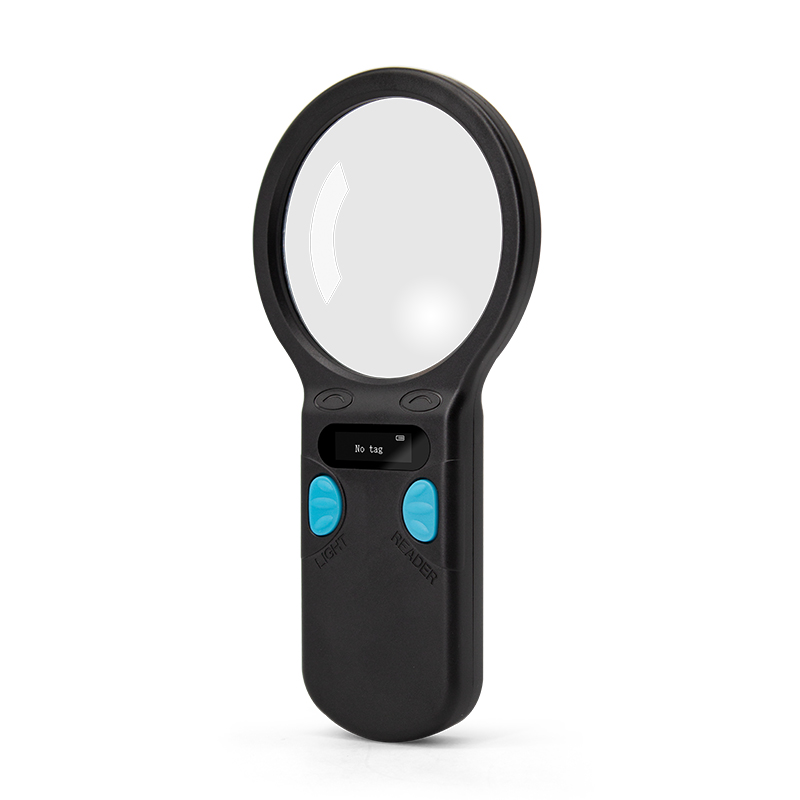
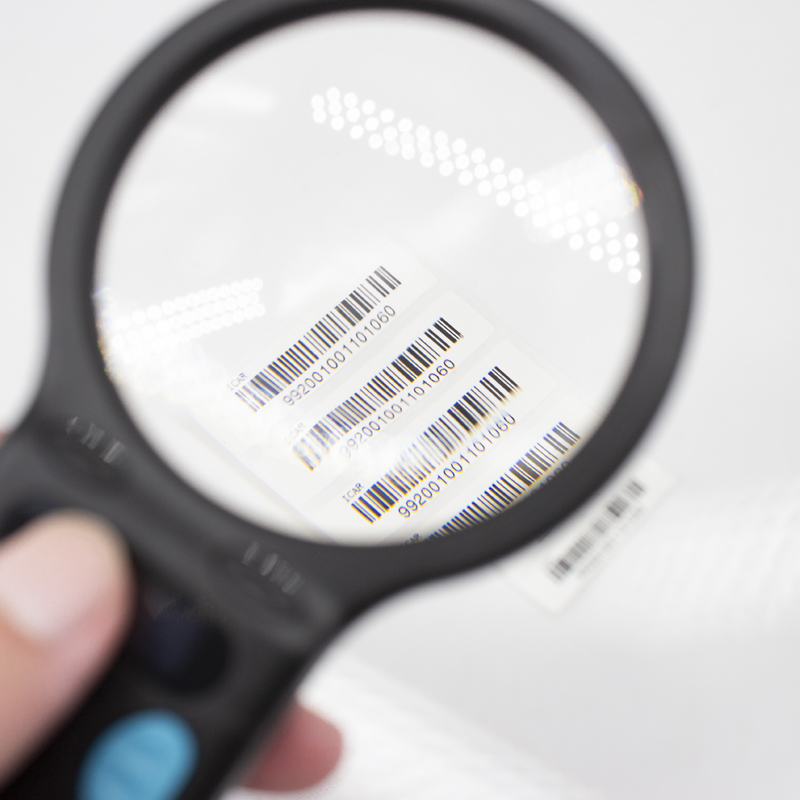
Animal Microchip and Ear Tag Compatibility
The JIA-90C reads two commonly used low-frequency animal identification formats:
- 125 kHz EMID
- 2 kHz FDX-B, compliant with ISO 11784/11785
It can identify both implanted glass transponders and larger electronic animal ear tags.
Typical reading performance with compatible tags is:
- 2–12 mm glass transponders:more than 8 cm
- 30 mm animal ear tags:more than 20 cm
Actual reading distance depends on the tag size, antenna performance, orientation, reader position, and surrounding environment.
Key Features and Technical Specifications
Key Features
- Supports 125 kHz and 134.2 kHzanimal identification
- Reads EMID and FDX-Btransponders
- Compatible with ISO 11784 / ISO 11785
- 91-inch high-brightness OLED display
- Stores up to 128 tag records
- USB 2.0, 2.4G wireless, and Bluetoothconnectivity
- Reading response time below 100 ms
- Built-in buzzer for scan confirmation
- 800 mAh rechargeable lithium battery
- Compact 97 ghandheld design
Technical Specifications
| Feature | Specification |
| Model | JIA-90C |
| Product Type | Handheld Animal Microchip Reader |
| Operating Frequency | 125 kHz / 134.2 kHz |
| Supported Protocols | EMID, FDX-B |
| Standard | ISO 11784 / ISO 11785 |
| Glass Microchip Read Distance | >8 cm with compatible 2–12 mm glass transponder |
| Ear Tag Read Distance | >20 cm with compatible 30 mm animal ear tag |
| Read Time | <100 ms |
| Display | 0.91-inch high-brightness OLED |
| Data Storage | 128 records |
| Communication | USB 2.0, 2.4G wireless, Bluetooth |
| Power Supply | 3.7V, 800 mAh rechargeable lithium battery |
| Operating Temperature | -10°C to +50°C |
| Storage Temperature | -30°C to +70°C |
| Operating Humidity | 5%–95% non-condensing |
| Dimensions | 175 × 88 × 17 mm |
| Net Weight | 97 g |
| Language | English; customization available |
USB, 2.4G and Bluetooth Data Connection
A key difference of the JIA-90C is the availability of three communication options for different animal-identification workflows.
USB 2.0 provides a wired connection for transferring stored tag information to a computer.
2.4G wireless provides an additional wireless communication option when a cable connection is inconvenient.
Bluetooth allows the reader to communicate wirelessly with compatible equipment that supports the reader’s Bluetooth connection.
The built-in memory can store up to 128 tag records, allowing IDs to be collected first and transferred when required.
This combination makes the reader suitable for both fixed workstations and mobile animal-identification tasks.
Animal Identification Applications
The JIA-90C can be used for:
- Veterinary clinics– read compatible implanted animal microchips.
- Animal shelters and rescues– retrieve electronic IDs from chipped animals.
- Breeders and kennels– record individual animal identification numbers.
- Livestock identification– scan compatible electronic ear tags during handling or inspection.
- Farm and field work– collect animal IDs with a portable handheld reader.
- Animal record management– store scanned IDs and transfer them through wired or wireless connections.
Because it supports both implanted microchips and larger electronic ear tags, the JIA-90C is suitable for a broader range of animal identification tasks than a pet-only scanner.
Bluetooth Animal Microchip Reader FAQs
Can the JIA-90C read both EMID and FDX-B tags?
Yes. It supports 125 kHz EMID and 134.2 kHz FDX-B animal transponders. FDX-B identification is compatible with ISO 11784/11785.
How far can it read animal microchips and ear tags?
With compatible tags, the reader can achieve more than 8 cm with 2–12 mm glass transponders and more than 20 cm with 30 mm electronic animal ear tags.
Actual distance varies according to tag performance and scanning conditions.
What is the difference between USB, 2.4G and Bluetooth?
USB 2.0 provides a wired data connection, while 2.4G and Bluetooth provide wireless communication options.
The appropriate connection method depends on the equipment and data workflow used in the animal identification system.
How many IDs can the reader store?
The built-in memory stores up to 128 tag records for later transfer.