


What EID Cattle Tags Do
EID cattle tags give every head in your herd a unique electronic identity. A 15-digit number stored on an EM4305 chip inside the tag links each animal to health records, breeding data, movement logs, and ownership history. Scan the tag with a handheld reader and the ID comes back instantly — no squinting at faded numbers, no paperwork to lose.
These tags use LF technology at 134.2 kHz. The read range is short by design — you scan one animal at a time at the chute or headgate. That is exactly what most farmers need for individual health checks, pregnancy tests, and vaccination records. The compact size sits close to the ear with minimal weight, so cattle wear them comfortably through years of grazing and handling.
Why These Tags Work for Traceability
- EID-compliant identification: EM4305 chip stores a unique 15-digit ID under ISO 11784/11785 — the standard governments and programs use for livestock traceability
- Compact and light: Small tag profile sits close to the ear — comfortable for calves and adults, minimal snagging on fences or feeders
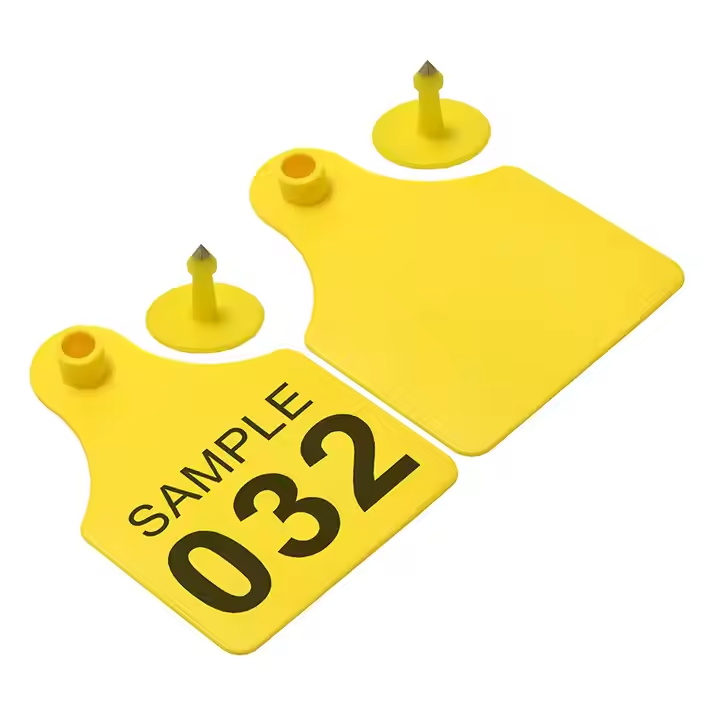
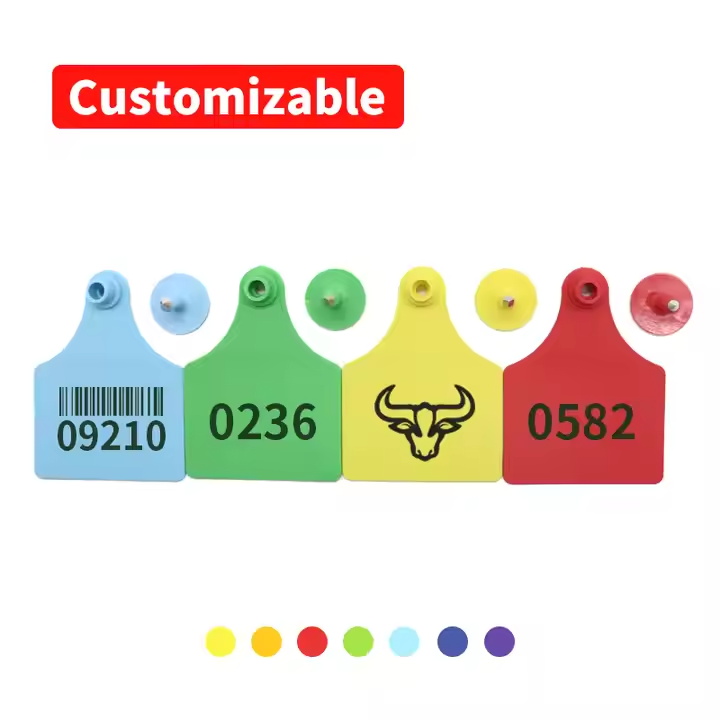
- Four color options: Yellow, pink, red, or blue — sort breeding groups, treatment batches, or age classes at a glance
- Laser-etched backup ID: Number on the tag face stays readable for years — a visual fallback when the reader stays in the truck
- Secure button lock: Male-female pair locks tight through the ear — low loss rate during grazing, transport, or handling
- IP68 sealed body: Fully waterproof and dustproof — survives rain, mud, and washing without chip damage
- No battery needed: The chip is passive — powered by the reader signal, so it works for the animal’s entire life
EID Cattle Tag Specifications
| Parameter | Specification |
| Material | TPU (Thermoplastic Polyurethane) |
| Chip | EM4305 |
| Frequency | 134.2 kHz (LF) |
| Protocol | ISO 11784/85 (FDX-B) |
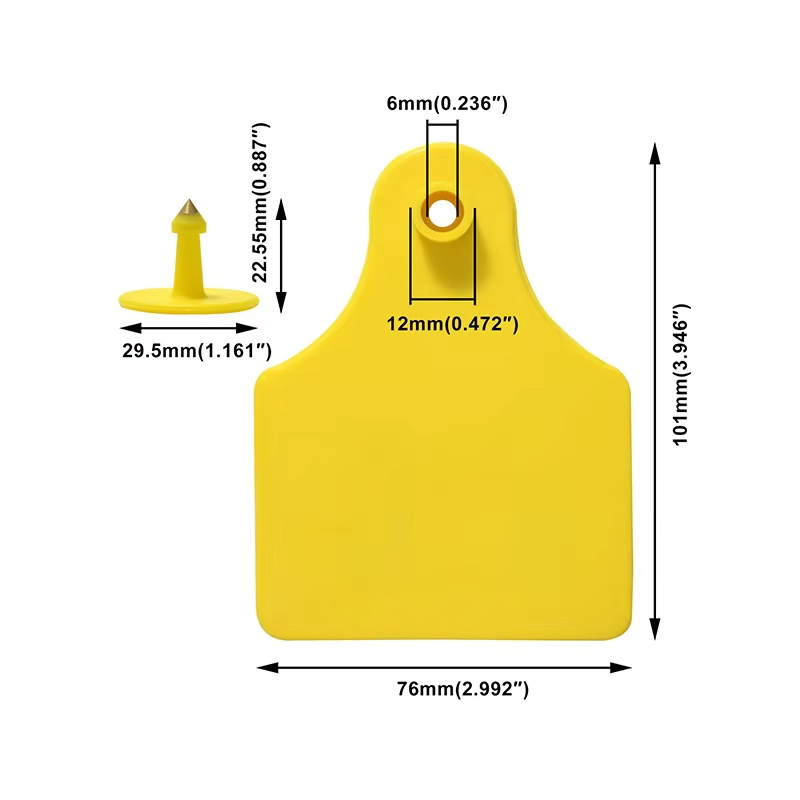
| Dimensions (Female) | 25 × 13 mm |
| Dimensions (Male) | 25 × 22 mm |
| Weight (Female) | 4.7 g |
| Weight (Male) | 1.9 g |
| Color Options | Yellow, Pink, Red, Blue |
| Reading Distance | Up to 50 cm |
| IP Rating | IP68 |
| Operating Temperature | -20°C to +65°C (No icing) |
| Application Temperature | -30°C to +75°C (No icing) |
| ID Marking | Laser-Etched |
| Packaging | 100 pcs per bag |
How to Apply EID Cattle Tags
- Load the tag: Place the male button into the applicator pin, then fit the female tag over the button guide.
- Restrain the animal: Secure the cow or calf in a chute or headgate for safe application.
- Position on the ear: Center the tag in the middle third of the ear, between the veins. Avoid the ridge and the ear tip.
- Squeeze and release: Press the applicator handles firmly until the male button locks through the female tag. Release and check that both halves are seated flush.
- Test the read: Scan the tag with your LF reader to confirm the ID reads clean and clear before releasing the animal.
Applications
- Government traceability programs: Assign EID-compliant IDs for national livestock tracking and interstate movement records
- Health and vaccination management: Record shots, treatments, and vet visits by scanning at the chute — each scan links to the animal’s permanent record
- Breeding program management: Track parentage, calving dates, and genetic lines with tamper-proof electronic identification
- Feedlot and dairy records: Monitor weight gain, milk production, and feed conversion per animal by scanning at the scale or parlor
- Disease control and quarantine: Isolate and track treated animals by scanning at the gate — know which animals have been exposed or vaccinated
- Sales and auction transparency: Buyers scan EID tags to verify health history, breed registration, and movement records before purchase
Ready to Make Your Herd EID-Compliant?
If you run a cattle operation and need EID cattle tags that meet traceability standards, our compact LF ear tags give you the compliance, durability, and color options to track every head. The right EID tags for cattle mean every scan links to a reliable record, every movement is tracked, and every sale is transparent.
Request a quote today and tell us your herd size, preferred colors, and traceability program requirements. We will help you pick the right EID ear tags for your operation and get them shipped fast.
FAQ
Q: What are EID cattle tags?
A: EID cattle tags are electronic identification ear tags with an RFID chip inside. Each tag stores a unique 15-digit ID number that links to the animal’s health records, breeding data, and movement history. EID stands for Electronic Identification.
Q: What does EID mean for cattle farmers?
A: EID means every animal has a permanent digital record. Governments, buyers, and breed associations use EID numbers to track animals from birth to market. Many traceability programs require EID-compliant tags for participation.
Q: What frequency do these EID tags use?
A: These tags operate at 134.2 kHz LF under the ISO 11784/11785 standard. This is the global standard for livestock EID systems and works with standard LF stick readers.
Q: How far can EID cattle tags be read?
A: These LF tags read up to 50 cm with a handheld stick reader. The short range is designed for scanning individual animals at a chute or headgate — exactly where most farmers need it.
Q: Are EID tags required for cattle?
A: Requirements vary by country and program. Many national traceability systems, export programs, and breed registries require or recommend EID-compliant tags. Check your local regulations or program guidelines.
Q: Can I choose the tag color?
A: Yes. These tags come in yellow, pink, red, or blue. Most farms use colors to sort breeding groups, treatment batches, or age classes for quick visual identification.