



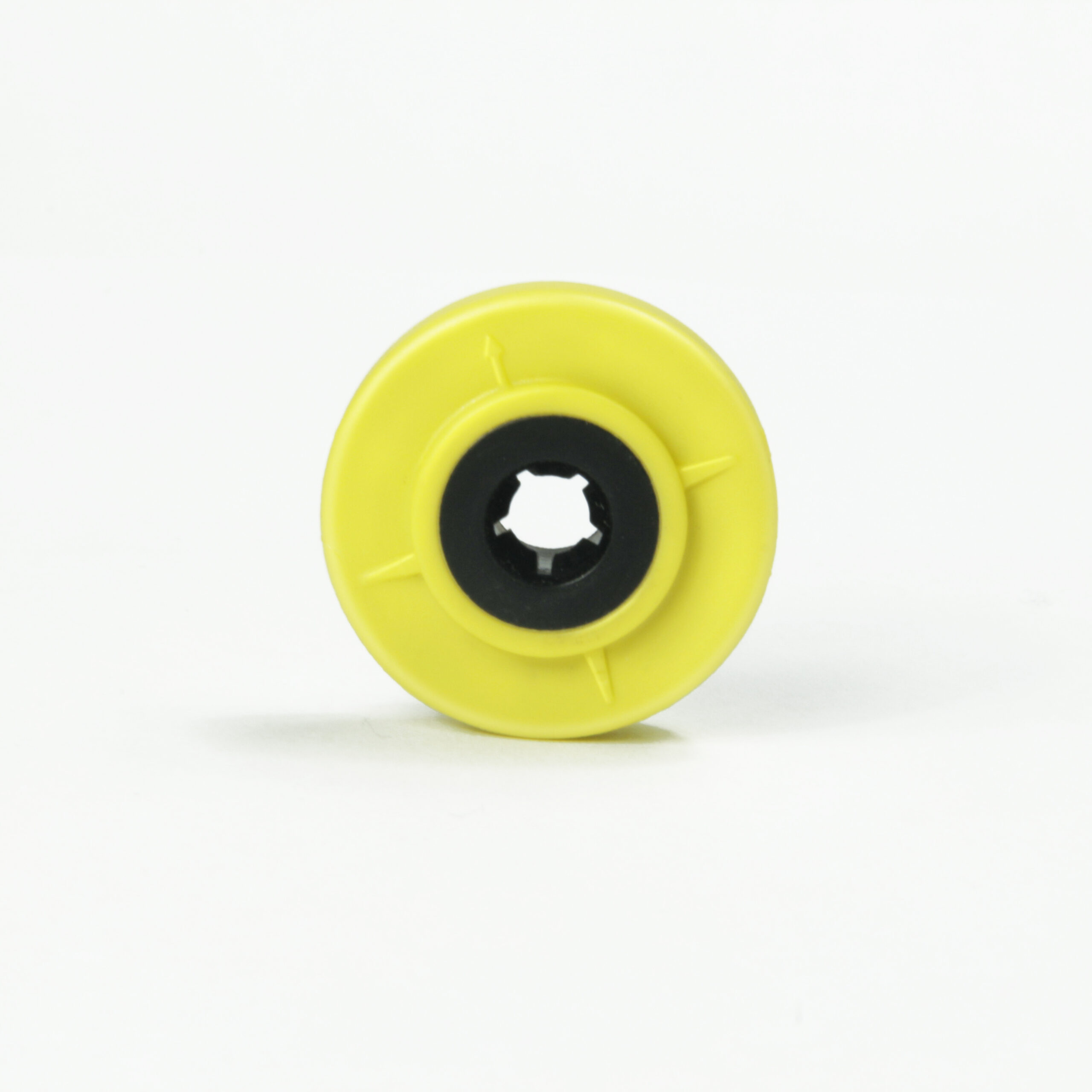

What Livestock Identification Tags Do
Livestock identification tags give every animal a unique ID and a color code. The laser-etched number on the tag face lets you read an ID from across the pen. The chip inside stores the same number digitally — scan it with a handheld reader to pull up health records, breeding data, and vaccination history without handling the animal.
These tags are small. The female tag sits close to the ear with minimal weight, so calves, lambs, and young goats wear them comfortably. The male-female button lock holds tight through rubbing, scratching, and weather — yet the design lets you remove and reuse the tag when needed.
Why These Tags Work on Real Farms
- Four colors for instant sorting: Yellow, black, pink, or red — separate breeding groups, treatment batches, age classes, or species without scanning a single tag
- Compact and light: Small tag profile sits close to the ear — comfortable for young stock and minimal snagging on fences or feeders
- Reusable design: Remove and reassign tags when animals move between groups or when a tag outlasts the animal
- Laser-etched backup ID: Number on the tag face stays readable for years — a visual fallback when the reader stays in the barn
- IP68 sealed body: Fully waterproof and dustproof — survives rain, mud, and washing without chip damage
- Secure button lock: Male-female pair locks tight through the ear — low loss rate during grazing, transport, or handling
Livestock Identification Tag Specifications
| Parameter | Specification |
| Material | TPU (Thermoplastic Polyurethane) |
| Chip Options | EM4305 (FDX-B), SIC7999 (HDX) |
| Frequency | 134.2 kHz (LF) |
| Protocol | ISO 11784/11785 |
| Dimensions (Female) | 30 × 13 mm |
| Dimensions (Male) | 29 × 23 mm |
| Color Options | Yellow, Black, Pink, Red |
| Reading Distance | Up to 50 cm |
| IP Rating | IP68 |
| Tensile Strength | ≥ 270N |
| Operating Temperature | -20°C to +65°C (No icing) |
| Application Temperature | -30°C to +75°C (No icing) |
| ID Marking | Laser-Etched |
| Packaging | 100 pcs per bag |
How to Apply Livestock Identification Tags
- Load the tag: Place the male button into the applicator pin, then fit the female tag over the button guide.
- Position on the ear: Center the tag in the middle third of the ear, between the veins. Avoid the ridge and the ear tip.
- Squeeze and release: Press the applicator handles firmly until the male button locks through the female tag. Release and check that both halves are seated flush.
- Test the read: Scan the tag with your LF reader to confirm the ID reads clean and clear before releasing the animal.
Applications
- Herd sorting by color: Use yellow for breeders, red for treatment groups, pink for calves or lambs, black for culls — spot the group from across the pasture
- Individual animal tracking: Scan the RFID chip to link each animal to health records, breeding data, and movement logs
- Health and vaccination management: Record shots, treatments, and vet visits by scanning at the chute — no handwritten notes to lose
- Breeding program management: Track heat cycles, insemination dates, and offspring parentage per animal
- Multi-species farms: One tag model works for cattle, sheep, and goats — simplify inventory and reduce tag stocking
Ready to Sort Your Herd with Color-Coded Tags?
If you run a mixed livestock operation and need livestock identification tags that make herd sorting simple, our compact LF ear tags give you four colors, a reliable chip, and the durability to last. The right color system means you spot the group from across the pasture — no scanner needed.
Request a quote today and tell us your herd size, preferred colors, and chip type. We will help you pick the right livestock ear tags for your farm and get them shipped fast.
FAQ
Q: What are livestock identification tags?
A: Livestock identification tags are ear tags with a laser-etched number on the surface and an RFID chip inside. Farmers use them to track animal ID, health records, breeding data, and movement logs.
Q: What do the different colors mean?
A: You decide. Most farms use colors to sort animals by breeding group, treatment status, age class, or species. The tag does not come with fixed color meanings — you assign them to match your system.
Q: How far can these tags be read?
A: These LF tags read up to 50 cm with a handheld stick reader. The short range works well for scanning individual animals at a chute or headgate.
Q: Are these tags reusable?
A: Yes. The male-female button design lets you remove the tag and reassign it to another animal. That saves money when tags outlast the animal or when herd groups change.
Q: What animals can wear these tags?
A: These tags are sized for cattle, sheep, and goats. The small 30 × 13 mm female tag and light weight work for adults and young stock alike.
Q: Are these tags waterproof?
A: Yes. The TPU body is rated IP68 — fully sealed against water and dust. The tags survive rain, mud, and high-pressure washing without damaging the chip.