


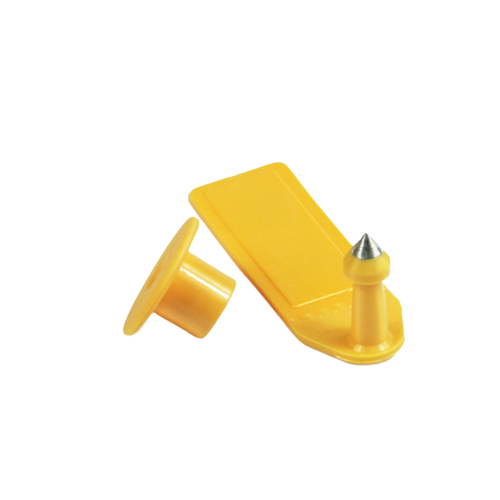
What These Tags Do for Your Herd
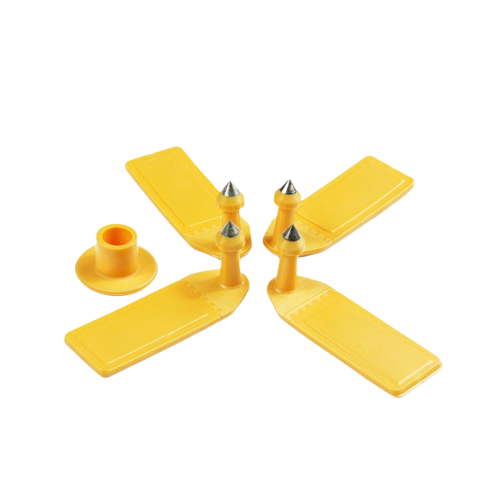
RFID livestock tags give each animal a unique digital ID stored on a chip inside a TPU ear tag. Scan the tag with a UHF reader to pull up health records, breeding data, vaccination history, and movement logs — no printed numbers to squint at, no paperwork to lose.
These tags use the UCODE 8 chip at 902–928 MHz UHF. Read range is 1–3 meters with a standard reader — enough to scan animals as they pass through a race or gate, or to check IDs in a holding pen without crowding each animal. The laser-etched surface carries your farm logo, sequential numbers, or custom text — permanently marked so it stays readable for the life of the tag.
Why These Tags Work on Real Farms
- Custom logo and text: Laser-etch your farm logo, brand, or custom numbering sequence directly on the tag face — free advertising every time someone sees your animals
- Lightweight design: Minimal ear stress, comfortable for calves, sheep, goats, and adult cattle — see exact weight in the specifications table
- Compact size: Low profile tag and button — less snagging on fences and feeders, less interference with daily movement
- Reliable read range: UHF chip reads reliably at gate and race distances — scan groups without stopping each animal
- Fully sealed body: Waterproof and dustproof — survives rain, mud, and high-pressure washing without chip damage
- Flexible construction: Non-toxic and skin-safe material for multi-year wear across cattle, sheep, goats, and swine
- High-visibility colors: Orange or yellow — stand out in the field for quick visual sorting
RFID Livestock Tag Specifications
| Feature | Specification |
| Product Type | RFID Livestock Ear Tags (Male-Female Pair) |
| Material | TPU |
| Color Options | Orange / Yellow |
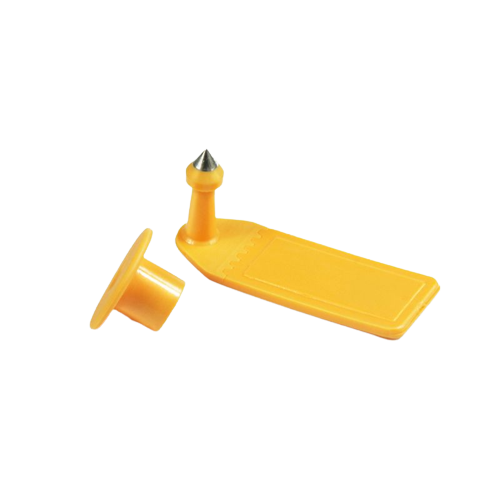
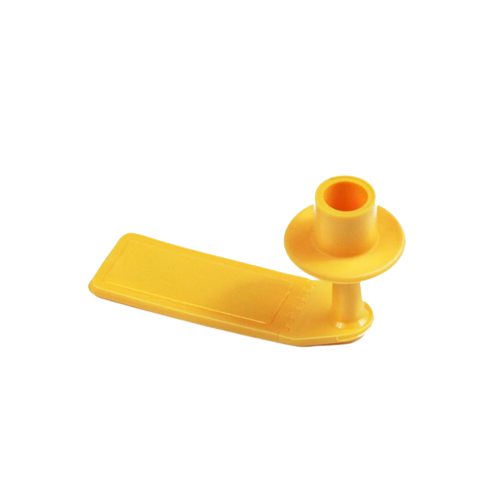
| Female Tag Dimensions | 52 × 18 × 23 mm |
| Male Tag Dimensions | 22 × 12 mm |
| Female Tag Weight | 3 g |
| Male Tag Weight | 1.4 g |
| Tensile Strength | > 270 N |
| IP Rating | IP68 |
| Chip | UCODE 8 |
| Frequency | 902–928 MHz |
| Protocol | ISO 18000-6C (UHF) |
| Reading Distance | 1–3 meters (depends on reader and environment) |
| Operating Temperature | -20°C to +65°C (no icing) |
| Application Temperature | -30°C to +75°C (no icing) |
| ID Marking | Laser-etched (numbers, text, or logo) |
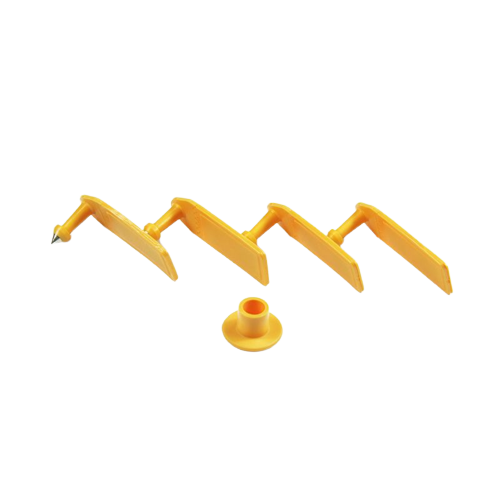
| Packaging | 100 pcs per bag |
Applications Across Livestock Species
- Cattle: Track health treatments, breeding cycles, weight gain, and movement from birth to market
- Sheep: Monitor flock health, shearing records, lambing data, and pasture rotations
- Goats: Record kidding dates, milk production, health treatments, and herd movements
- Swine: Manage pen assignments, feed conversion, vaccination schedules, and slaughter readiness
- Disease control: Scan to prevent double-dosing during vaccination drives and flag sick animals fast
- Traceability programs: Maintain records that satisfy national livestock identification and export requirements
- Breeding records: Track parentage, AI dates, and offspring performance with unique IDs
How to Apply RFID Livestock Tags
- Match the tag with the correct applicator for this tag model.
- Restrain the animal in a chute, headgate, or holding crate.
- Place the female tag on the inner ear surface and the male button on the outer surface.
- Squeeze the applicator firmly to lock the two halves together through the ear.
- Scan the tag with your UHF reader and register the ID in your herd management system.
Brand Your Herd and Track Every Head
If you need RFID livestock tags that combine custom branding with reliable UHF tracking, these laser-etched tags give you both. Your logo on every ear, a unique ID in every chip.
Request a quote today. Tell us your herd size, species, preferred color, and what you want laser-etched — numbers, logo, or both. We will configure the right tags and ship them fast.
Frequently Asked Questions
Q: What are RFID livestock tags?
A: RFID livestock tags are ear tags with an embedded UHF RFID chip that stores a unique digital number. Farmers scan them with a UHF reader to identify animals and link each one to health, breeding, and movement records.
Q: Can I add my farm logo to these tags?
A: Yes. Each tag can be laser-etched with your farm logo, brand name, sequential numbers, or custom text. The etching is permanent and resists dirt, water, and UV exposure.
Q: What frequency do these tags use?
A: These tags operate at 902–928 MHz UHF under ISO 18000-6C. This frequency reads reliably at 1–3 meters with a standard UHF reader, making it ideal for gate scanning and pen checks.
Q: How far can these tags be read?
A: Read range is 1–3 meters with a standard UHF reader. Fixed panel readers at gates may achieve the upper end of this range. Handheld readers typically give shorter distances. Actual range depends on reader power, antenna setup, and environmental conditions.
Q: Are these tags waterproof?
A: Yes. The TPU body is rated IP68 — fully sealed against water and dust. Tags survive rain, mud, and high-pressure washing without damaging the chip or fading the laser etching.
Q: Will the laser-etched logo or numbers fade?
A: No. Laser etching burns the marking into the TPU surface. It resists dirt, water, UV exposure, and abrasion better than printed or handwritten markings.
Q: What animals can these tags be used on?
A: These tags work on cattle, sheep, goats, and swine. The lightweight design (3 g female tag) makes them suitable for calves, lambs, and kids as well as adult animals.