


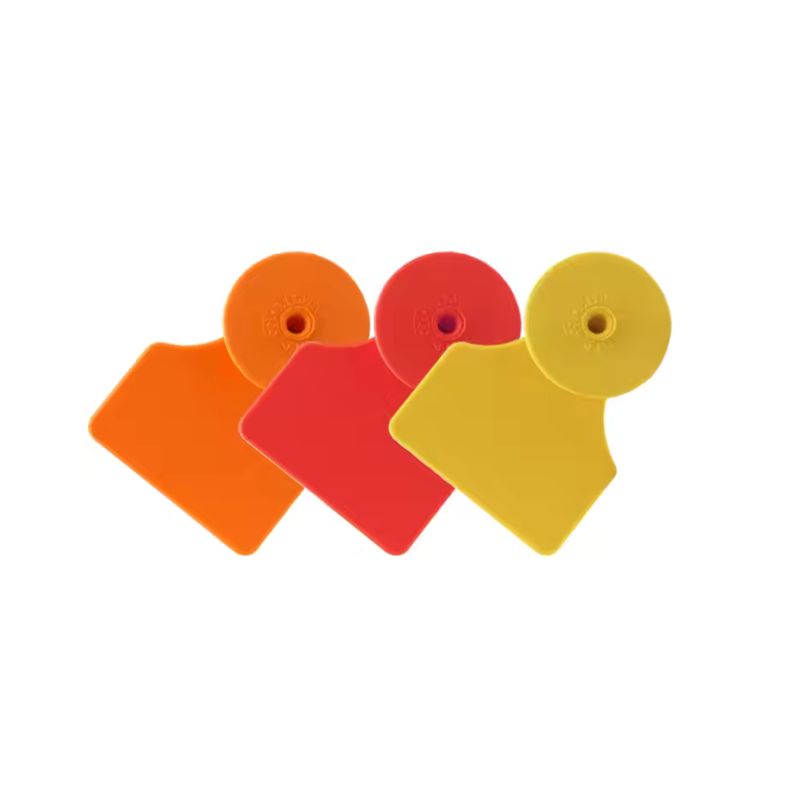
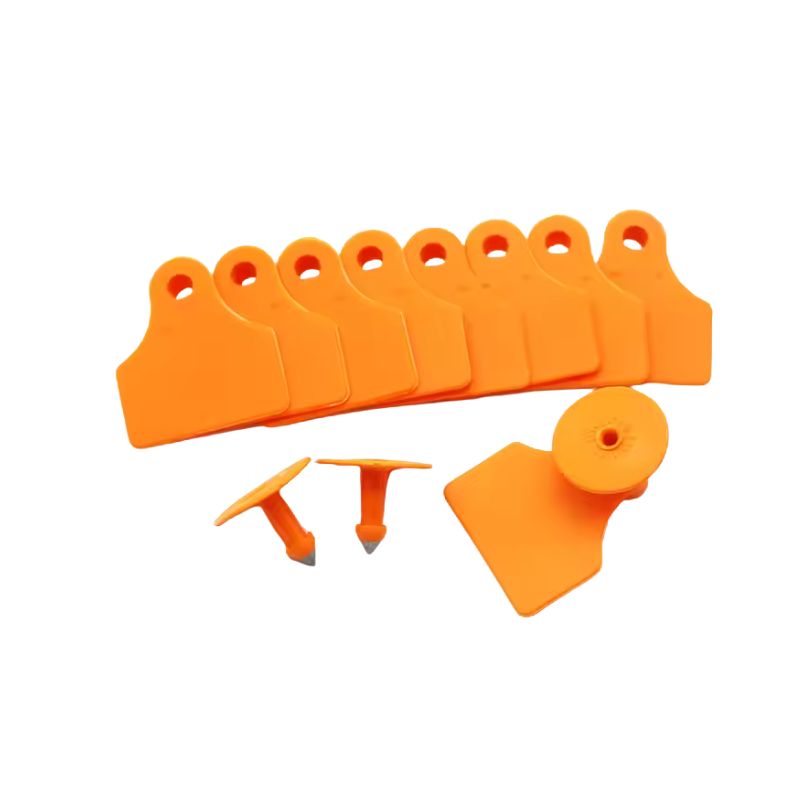
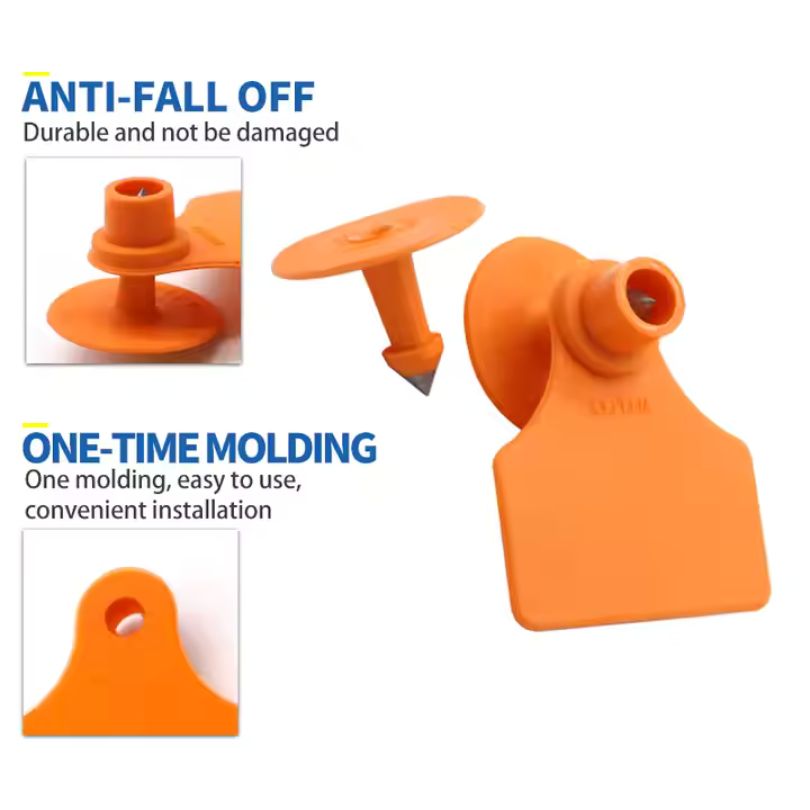
UHF Cattle Ear Tags for Farm Identification
These RFID cattle ear tags are passive identification tags for beef farms, dairy operations and livestock system integrators. Each tag carries an electronic code that your software can associate with an individual animal.
RFID stands for radio frequency identification. A reader captures the tag code using radio signals, without requiring a direct view of the printed number.
The tag provides the identification link. Your management system stores the animal’s weight, treatment, breeding and movement records.
Key Features
- Battery-free operation: The tag draws power from the reader’s radio signal, so there is no internal battery to replace.
- Flexible TPU body: Thermoplastic polyurethane forms the ear tag body and allows it to bend during handling.
- Programmable identification: The NXP UCODE 8 chip has writable EPC memory for an assigned animal identification code. EPC means Electronic Product Code.
- Multiple-tag reading: The Gen2 protocol allows a reader to identify several tags within its coverage area. Software must filter repeated detections to produce an animal count.
Technical Specifications
| Parameter | Specification |
| Product type | Passive UHF RFID cattle ear tags |
| Frequency range | 860–960 MHz; confirm performance in the regional operating band |
| Communication protocol | EPC Class 1 Gen2 / ISO 18000-6C |
| Chip | NXP UCODE 8 |
| EPC memory | 128 bits |
| TID memory | 96 bits, factory-locked, including a 48-bit unique serial number |
| User memory | None |
| Body material | TPU |
| Reader requirement | Compatible UHF EPC Gen2 reader |
| Minimum order quantity | 500 sets |
Chip memory specifications are provided in the NXP UCODE 8 technical information.
Applications in Cattle Handling
UHF cattle ear tags can connect identification events to specific farm tasks when paired with suitable readers and software.
| Handling point | Practical use |
| Weighing chute | Associate a captured tag code with a weight reading |
| Treatment station | Open the correct animal record before entering a vaccination or treatment |
| Pen transfer gate | Record movement between designated farm areas |
| Loading lane | Compare detected tag codes with a planned shipment list |
These are application examples. Connecting identification events to scales, treatment records or movement logs requires integration with your farm equipment or management software.
Testing Tags in Your Cattle Handling System
Test sample tags at the intended handling point before placing a larger order. Use your planned reader, antenna position and power settings, with tags fitted in their intended position on cattle.
Check three things during the trial:
- Missed reads: Does the system detect each animal passing through the target area?
- Unwanted reads: Does it capture tags from cattle in nearby pens or lanes?
- Record matching: Does each captured code open the correct animal record in your software?
For weighing applications, keep the reading area focused on the animal occupying the scale. Adjust antenna placement and reader power based on the trial results.
Our technical team can review your UHF reader configuration and installation layout before testing.
Discuss Your Cattle Identification Setup
Send our technical team your reader model, country of use, installation layout and required quantity. We can review the tag and reader combination before you place an order. For other formats, see our cattle identification tag range.
Frequently Asked Questions
Q: Do these ear tags provide GPS location?
A: No. These passive UHF tags are detected within a compatible reader’s coverage area. A recorded scan can identify a checkpoint, but the tags do not transmit GPS coordinates.
Q: Can a standard smartphone read these tags?
A: A standard smartphone’s built-in NFC function cannot read UHF ear tags. You need a dedicated UHF reader or a compatible external UHF accessory.
Q: Do you supply complete herd management software?
A: We supply RFID tags and reader hardware. SDK or API availability depends on the selected reader model. Your software provider or integrator must connect the reader output to the herd management system.
Q: What should I check before applying the tags?
A: Confirm that the applicator and fastening components match the tag. Follow the application instructions and your farm’s veterinary guidance on placement and hygiene. Read each tag and verify its database assignment before application.
Q: What is the minimum order quantity?
A: The minimum order quantity is 500 sets. Confirm the components included in each set when requesting a quotation.