






















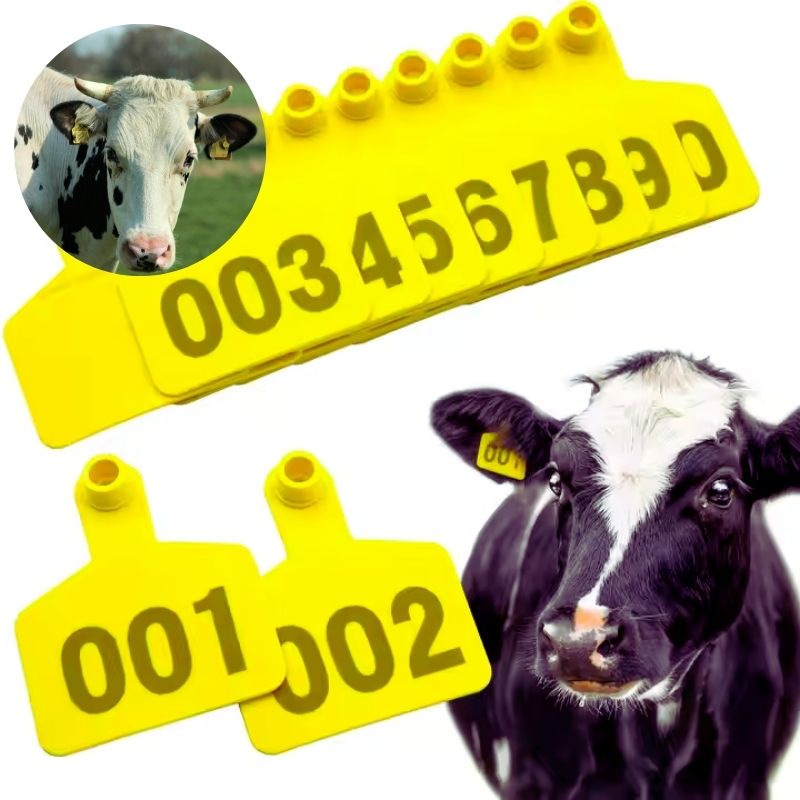
RFID tags are widely used in cattle farming to help identify animals and manage herd information more efficiently. Compared with visual ear tags, RFID tags allow data to be read automatically using a scanner, which reduces manual work and lowers the risk of recording errors. They are commonly used for tracking health treatments, breeding records, feeding systems, and animal movements.
Getting RFID tags for cattle is not difficult, but the right way to get them depends on where you are and how you plan to use them. Some regions have specific rules about animal identification, while other farms mainly focus on daily management needs. Before ordering RFID tags, it is important to understand the basic requirements and what factors affect your choice, so you can select tags that match your operation and long-term use.
What Are the Requirements for RFID Tags in Cattle
The requirements for RFID tags on cattle are set by animal identification and disease control systems in each country. These rules define what type of tag can be used, how the number is structured, and how the tag is registered.
If You Are in the United States
In the United States, cattle identification is regulated under the USDA Animal Disease Traceability program. Official RFID ear tags cattle are part of the Animal Identification Number (AIN) system, commonly called the “840 tag” system because the ID number starts with 840.
An official 840 RFID tag must:
- Use a 15 digit Animal Identification Number beginning with 840
- Be tamper evident and intended for one time use
- Be issued or supplied through USDA approved channels
- Be both visually and electronically readable.
- Comply with ISO 11784 and ISO 11785 for low frequency RFID at 134.2 kHz
These tags are used when cattle are moved across state lines, sold through regulated markets, or sent to slaughter. The number format and tag source are controlled by the USDA system and are not freely chosen by the farm.
If You Are in the EU or the UK
In the European Union and the United Kingdom, cattle identification is governed by national cattle identification regulations based on EU livestock identification law. Cattle must be identified with ear tags that are issued or approved by the competent authority and linked to a registered holding.
Electronic ear tags used for cattle must:
- Meet the technical specifications for electronic identification
- Be compatible with national cattle databases
- Use an approved number structure assigned to the holding
- Be supplied through approved distributors
Farmers do not define their own numbering format for official identification. Tag numbers and registration are managed through the national system.
If You Are in Australia
In Australia, cattle identification is regulated under the National Livestock Identification System, known as NLIS. RFID ear tags used for cattle must be approved for use in the NLIS program and linked to the property where the animal is first identified.
NLIS RFID cattle tags must:
- Carry an NLIS compliant electronic number
- Follow ISO 11784 encoding rules
- Be registered to a specific Property Identification Code (PIC)
- Be sourced from suppliers approved for NLIS use
These tags are used for animal movement recording and disease traceability across states.
If You Are Using RFID Cattle Tags Only for Farm Management
When RFID tags are used only for internal farm management and not for legal identification, they are not part of government identification systems. These tags are used for health records, breeding data, feeding systems, and herd management.
In this case, the requirements are technical rather than regulatory:
- The RFID tag must match the frequency and protocol supported by the farm’s readers
- The tag must be designed for livestock use and resist moisture, dirt, and physical stress
- The numbering format must match the farm’s own management system
These tags are controlled by the farm or system operator and must not be used in place of official identification tags when national rules require an official ID.
What You Normally Need to Decide Before Buying
Before buying RFID ear tags for cattle, you need to define several technical and physical parameters. These choices affect how reliably tags are read, how long they stay on the animal, and whether they work with your existing equipment and management system.
What Type of RFID Cattle Ear Tag You Need
RFID cattle ear tags differ mainly by how the RFID chip is built into the ear tag body.
Button-type RFID ear tags
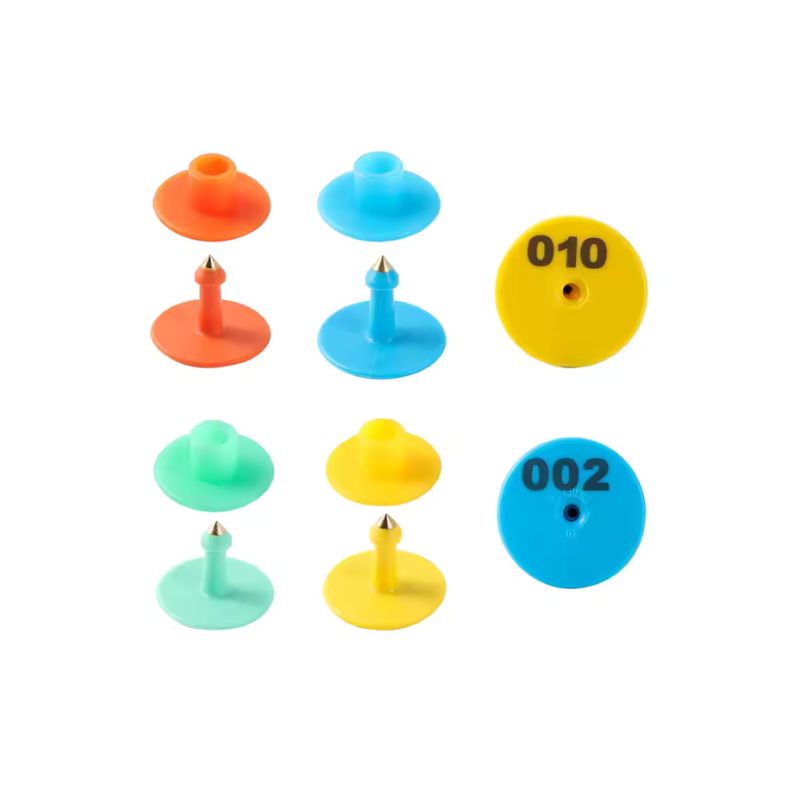
These use a two-piece male and female design. The RFID transponder is molded into the female part. This structure provides strong retention and is widely used for permanent cattle identification. Button tags are compact and less likely to snag on fences or feeders.
Panel-type RFID ear tags

These have a larger flat surface where the RFID chip is embedded inside the plastic panel. The panel allows printing of large numbers, barcodes, or farm logos. They are chosen when animals must be identified visually from a distance as well as scanned electronically.
Dual-component RFID ear tags
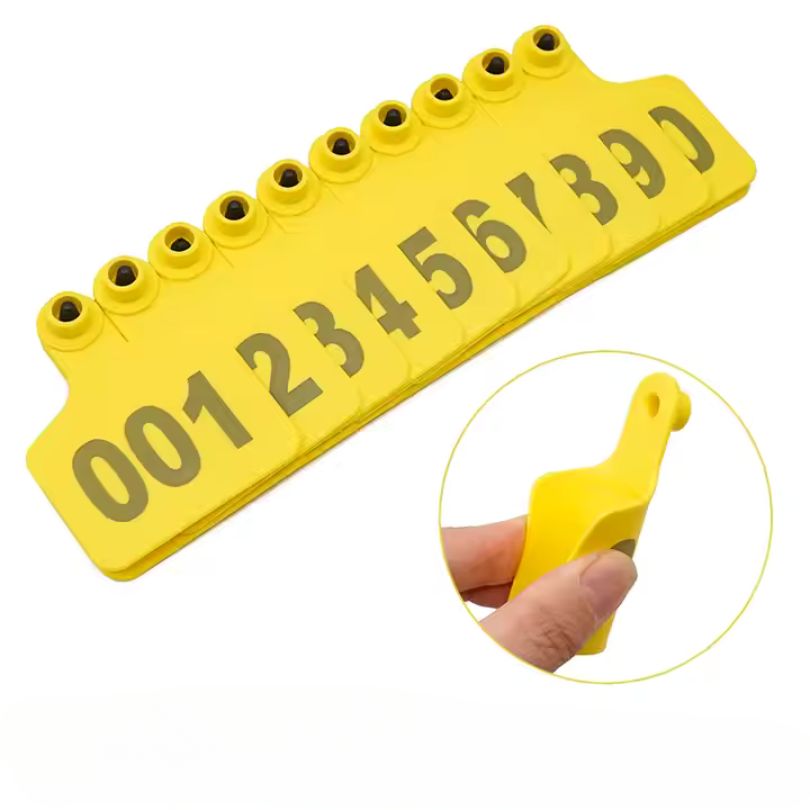
These consist of a visual panel tag and a smaller RFID button linked to the same ID number. The panel provides easy visual reading, while the RFID button is optimized for electronic scanning. This design separates the visual and electronic parts to improve durability and scanning stability.
Electronic-only RFID ear tags
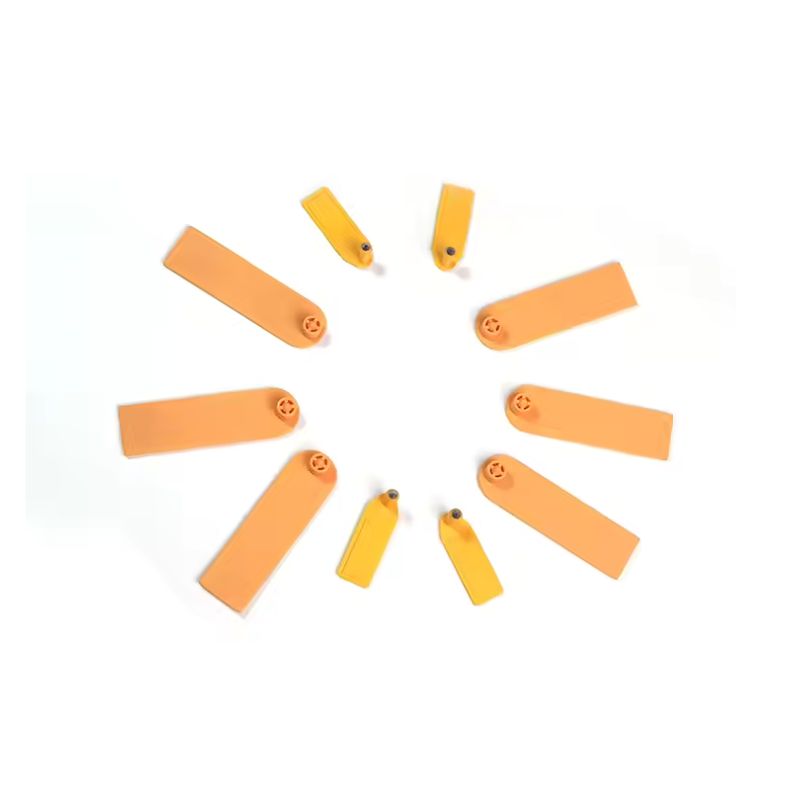
These contain only the RFID transponder without a large printed panel. They are usually smaller and lighter. They are used in systems where animals are identified mainly through readers rather than by sight, such as automatic feeders or race readers.
Each structure affects ear load, retention strength, and visibility, so the choice depends on how cattle are handled and how identification is performed on the farm.
Low Frequency (LF) or Ultra-High Frequency (UHF)
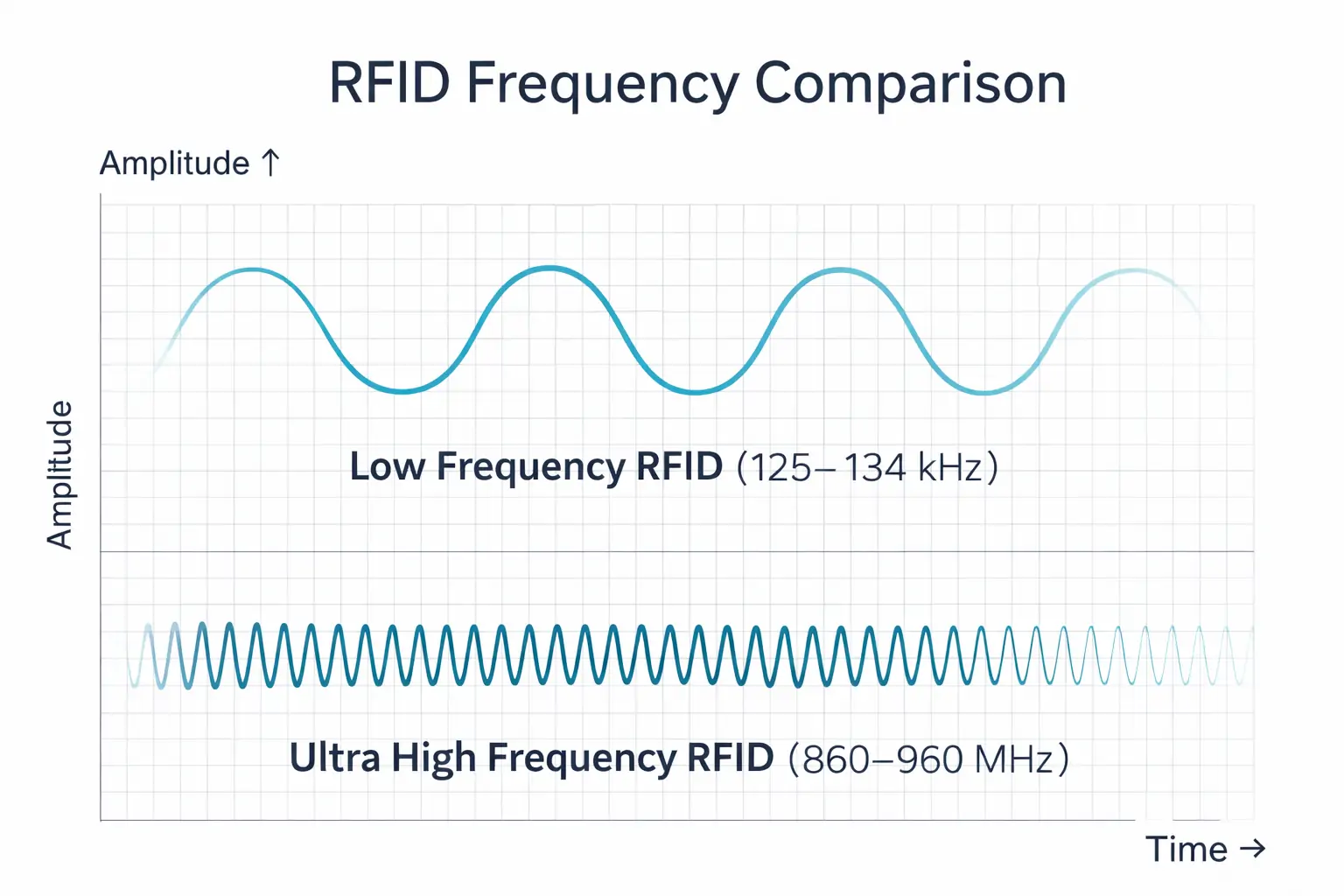
Low-frequency RFID ear tags operate at 134.2 kHz and follow ISO 11784 and ISO 11785 protocols. They are designed for short reading distances and stable performance near animal bodies, which contain a high percentage of water. LF tags are commonly read one animal at a time using handheld or race readers.
Ultra-high-frequency RFID ear tags operate in the UHF band and are designed for longer reading distances and faster reading of multiple animals. They are used in systems such as automatic weigh scales, feed stations, and yard readers where several animals pass through a reading zone together.
The correct choice depends on what readers are already installed and how animals are presented to the reader during handling.
Size for Calves or Adult Cattle
RFID ear tags are produced in different sizes to match ear thickness and age of a cattle.
Smaller tags are designed for calves and young cattle. They reduce ear load and lower the risk of tearing when the ear is still thin and soft.
Larger tags are designed for adult cattle. They provide higher retention strength and allow larger printed surfaces for visual identification.
Using a tag that is too large on young animals increases the risk of ear injury. Using very small tags on adult cattle can increase tag loss due to weaker locking force.
Tamper-Evident or Standard Locking
Some RFID cattle ear tags are designed with tamper-evident locking mechanisms. If someone tries to remove the tag, the pin or body breaks or deforms. This prevents reusing the tag and shows that the tag has been interfered with.
Standard locking tags can be cut and replaced without visible damage. These are often used in internal systems where tags may need to be replaced or reassigned.
Quantity and Numbering Planning
Before placing an order, you should estimate how many tags will be needed over a defined period. This includes newborn calves, replacement animals, and spare stock for losses.
You also need to plan how the numbers will be structured:
- Sequential numbering for simple tracking
- Herd or group-based numbering for multiple locations
- Printed management codes combined with electronic IDs
Planning numbering and quantity in advance prevents mixing incompatible tag batches and helps keep digital records consistent over time.
How to Get RFID Tags for Cattle
RFID tags for cattle can be obtained either through official programs or directly from an RFID livestock tag manufacturer. For farms, integrators, and livestock projects that need stable supply, flexible formats, and technical support, sourcing from a manufacturer is often the more practical option.
Our company manufactures RFID cattle ear tags designed for long-term livestock use. These electronic identification tags are built to meet USDA requirements and are used in cattle identification and herd management systems. Each tag carries a unique electronic ID that can be read automatically with RFID readers during routine handling.

What We Provide as a Manufacturer
We produce RFID tags for cattle as part of a complete livestock identification product line. This includes both the physical tags and technical support for system use.
Key Benefits
- Superior Durability: High retention design for the life of the animal
- USDA Compliant: Meets all federal regulations for cattle identification
- Easy Implementation: Simple application process
- Enhanced Traceability: Accurate tracking from birth to slaughter
Technical Specifications
Feature | Detail |
Tag Type | Electronic RFID |
Compliance | USDA Approved |
ID Format | Unique 15-digit number |
Reading Range | Up to 30 inches |
Durability | Weather-resistant |
Durability and Retention Design
RFID cattle tags must survive harsh conditions such as mud, rain, sunlight, and physical contact with fences and feeders. For this reason, durability is treated as a core design requirement rather than an extra feature.
Our RFID cattle tags are designed with:
- Impact-resistant plastic bodies
- Weather-proof construction for outdoor use
- UV-resistant materials to prevent fading
- Tamper-evident locking structure
- Anti-bacterial surface treatment
These elements help keep the tag readable and attached for long periods, reducing the need for replacement and retagging.
Integration with Cattle Management Systems
RFID tags are most useful when connected to digital herd management tools. The electronic ID can be linked with farm software to replace manual record keeping.
Common uses include:
- Recording animal health treatments
- Monitoring weight and growth
- Managing vaccination schedules
- Tracking breeding history
- Maintaining compliance records
Our RFID cattle tags are commonly used with herd management software such as CattleMax and similar systems, allowing scanned data to be stored and retrieved automatically.
Customization and Supply Options
Working directly with a manufacturer allows more control over how tags are produced and delivered.
Customization can include:
- Button-type or panel-type RFID ear tags depending on how animals are handled
- Visual number printing for easy identification from a distance
- Farm names, logos, or management codes printed on the tag surface
- Electronic ID encoding matched to your database or software structure
- Color and size selection for different herds or age groups
These options help keep physical tags and digital records aligned, reduce manual matching work, and make herd identification more consistent over time.
Special Offer: Request a sample pack today to experience the quality and durability of our RFID livestock identification solutions. Our team of experts is ready to help you find the perfect electronic identification solution for your operation. Contact us now for:
- Free Consultation
- Competitive Pricing
- Bulk order discounts
- Technical support
- Implementation guidance

How Much Does an RFID Ear Tag for Cattle Cost
The price of RFID ear tags for cattle varies based on the tag technology, structure, durability, and order volume. Because these tags combine an electronic chip with a physical ear tag built for livestock use, they cost more than simple visual tags but deliver long-term value through automated data capture and reduced labor.
Below are specific cost ranges and examples that reflect real market pricing for RFID cattle tags.
Tag Type | Approximate Price Per Tag | Notes |
Entry-level LF/UHF RFID tags (bulk, basic) | $0.20–$0.80+ | Basic passive tags from manufacturers in high volume; usually not printed or encoded. |
Standard RFID cattle ear tags | ~$2.00–$5.00 | Common range for standard livestock RFID tags with basic durability. |
USDA-style or 840 EID RFID tags | ~$2.25–$2.90+ | Official RFID tags typically sold by distributors; may require a premises ID to order. |
Matched RFID + visual tag sets | ~$4.00+ | Some suppliers bundle a visual tag and electronic RFID in one product set. |
Conclusion
Getting RFID tags for cattle depends on where you source them and whether the tags match your technical and regulatory needs. Once those points are clear, the process becomes straightforward.
If you need RFID ear tags for cattle management or identification projects, working directly with a livestock RFID tag manufacturer allows you to obtain tags in the required formats, test them before large orders, and keep long-term supply consistent.
Contact us for a free consultation or request a sample pack to test performance in your own working environment.