






















Čísla na ušních známkách skotu slouží k identifikaci každého zvířete a jeho propojení s evidencí. To pomáhá zemědělcům a veterinářům řídit zdraví, chov a každodenní péči a také podporuje úřední systémy sledování a bezpečnosti potravin. Ušní známky jsou důležitou součástí moderního řízení stáda a kontroly nemocí.
Identifikace zvířat se používá již dlouho. V minulosti se dobytek označoval metodami, jako je cejchování nebo ušní značky. Počátkem 20. století se rozšířily očíslované ušní známky, protože byly lépe viditelné a spolehlivější. Dnes se v mnoha zemědělských podnicích používají také elektronické systémy, jako jsou značky RFID, které umožňují rychlou a přesnou identifikaci zvířat pomocí skenerů a softwaru.
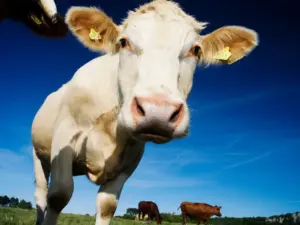
Co znamenají čísla na ušních štítcích skotu?
Čísla na ušní známce skotu nejsou náhodná. Slouží k tomu, aby nesla konkrétní informace o zvířeti. V závislosti na použitém systému může jedno číslo známky obsahovat jeden typ informace nebo několik kombinovaných informací.
1). Identifikace jednotlivých zvířat
Jedná se o číslo, které identifikuje jedno zvíře v rámci stáda nebo systému. Používá se k propojení krávy se záznamy, jako jsou zdravotní ošetření, historie chovu a údaje o produkci. Na mnoha farmách je to hlavní číslo, které lidé používají k rozpoznání zvířete.
2). Identifikátor farmy nebo stáda
Některá čísla štítků obsahují kód, který udává, ke kterému hospodářství nebo stádu zvíře patří. To pomáhá oddělit zvířata od různých majitelů a usnadňuje správu velkých nebo smíšených skupin skotu.
3). Identifikátor země (pouze úřední značky)
U vládních značek může číslo obsahovat kód země. Ten udává, která země zvíře zaregistrovala, a používá se pro vnitrostátní sledování, kontrolu pohybu zvířat a monitorování nákaz.
4). Rok narození nebo výrobní skupina
Některé systémy číslování zahrnují rok narození zvířete nebo skupinu, do které patří. To pomáhá zemědělcům rychle zjistit stáří zvířete nebo z jaké skupiny pochází, což je užitečné pro rozhodování o chovu a vyřazování.
5). Elektronický identifikátor RFID
U elektronických ušních známek je v čipu RFID uloženo také digitální číslo. Toto číslo je čteno skenery a propojeno s počítačovými systémy. Umožňuje automatickou identifikaci zvířat bez nutnosti číst vytištěné číslo od oka.
Příklad
Značka vytištěná jako US 45 23-017 lze číst takto:
- US = Zvíře je registrováno ve Spojených státech. V této části je uvedena země odpovědná za úřední identifikaci zvířete.
- 45 = Kód farmy nebo stáda. Označuje, ke kterému hospodářství zvíře v rámci národního systému patří.
- 23 = Zvíře se narodilo v 2023. Tato část je uvedena proto, aby zemědělec mohl rychle zjistit věk zvířete, aniž by musel kontrolovat záznamy.
- 017 = Číslo jednotlivého zvířete. Znamená to, že tato kráva byla 17. zvířetem označeným v daném roce na daném hospodářství.
V tomto příkladu vám tedy celé číslo říká:
Toto zvíře patří do farmy 45 ve Spojených státech, narodilo se v roce 2023 a je zvířetem číslo 17 z této skupiny.
To neznamená, že všechny značky používají přesně tento formát. Pouze ukazuje, jak může jedno číslo značky kombinovat zemi, farmu, rok narození a individuální ID do jednoho čitelného kódu v závislosti na použitém systému.
Vizuální štítky vs. štítky RFID
Ušní známky skotu lze číst dvěma hlavními způsoby. Některé čtou lidé a jiné stroje. Tento rozdíl ovlivňuje způsob, jakým se čísla používají a jak vypadají.
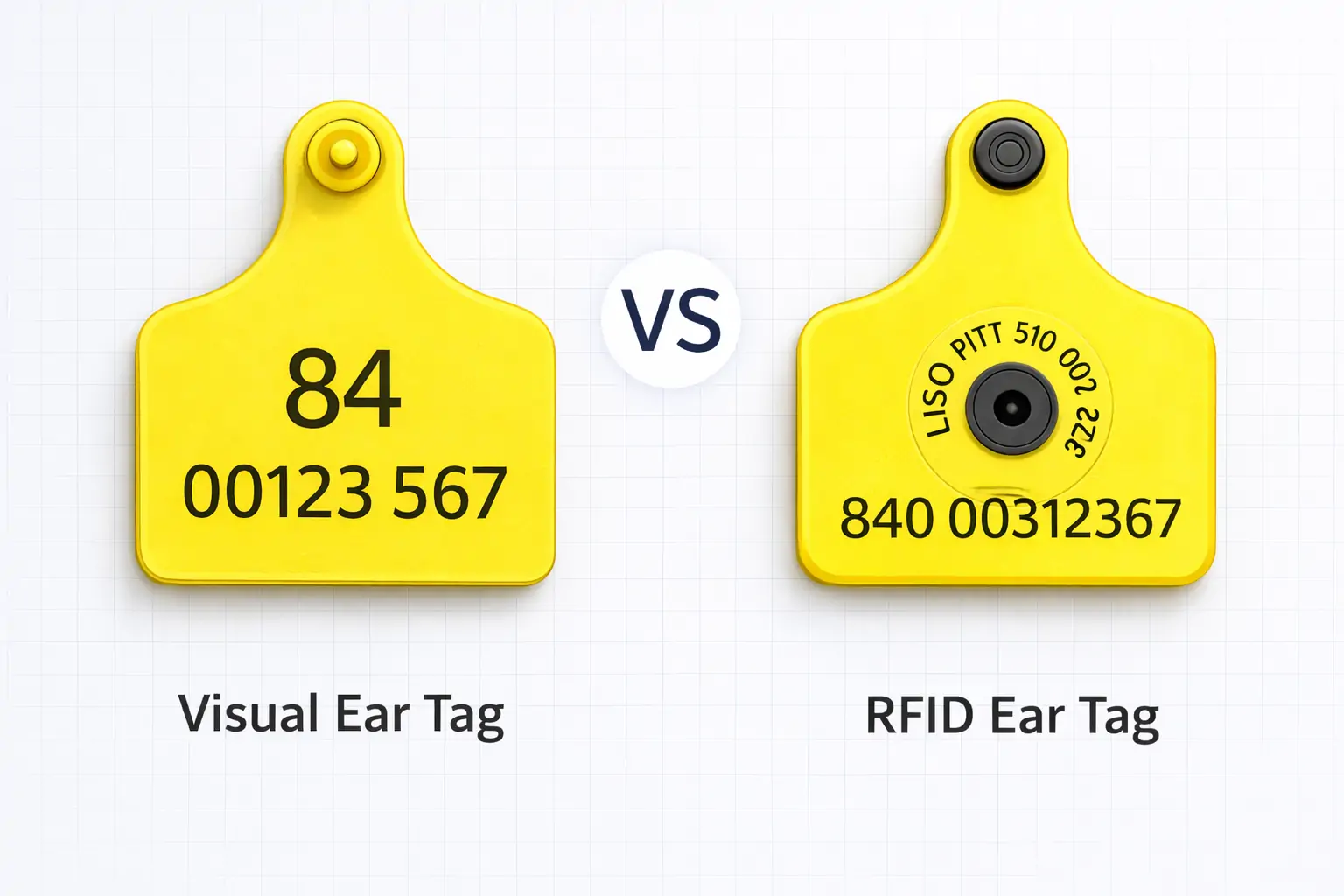
Vizuální (tištěné) ušní štítky
Vizuální značky obsahují čísla, která mohou lidé vidět a přečíst. Zemědělci je používají při každodenní práci k identifikaci zvířat na poli nebo ve stáji.
Tištěné číslo je navrženo tak, aby bylo krátké a snadno rozpoznatelné na dálku. Formát je flexibilní a může být zvolen zemědělským podnikem nebo vyžadován národním programem.
Ušní štítky RFID (elektronické)
Štítky RFID obsahují malý elektronický čip uvnitř štítku. Číslo uložené v čipu se přečte pomocí skeneru a odešle do počítačového systému.
Toto číslo je pevné a jedinečné pro danou značku. Umožňuje rychlou a přesnou identifikaci bez nutnosti číst vytištěné číslo od oka. Systémy RFID se často používají pro automatické vážení, třídění a programy úřední sledovatelnosti.
V praxi mnoho značek kombinuje obojí. Mají tištěné číslo, které si lidé mohou přečíst, a elektronické číslo, které si mohou přečíst skenery. Každá z nich slouží k jinému účelu při správě skotu.
Jak vytvořit systém číslování pro tištěné ušní známky pro skot
Tištěná čísla štítků se řídí specifickými konstrukčními pravidly. Systém číslování není jen volbou stylu. Určuje, jakým způsobem je do čísla visačky umístěn rok narození zvířete, pořadí narození nebo informace o rodině, aby z něj lidé mohli přímo vyčíst význam. Níže jsou uvedeny nejběžnější systémy používané zemědělskými podniky na tištěných štítcích pro skot.
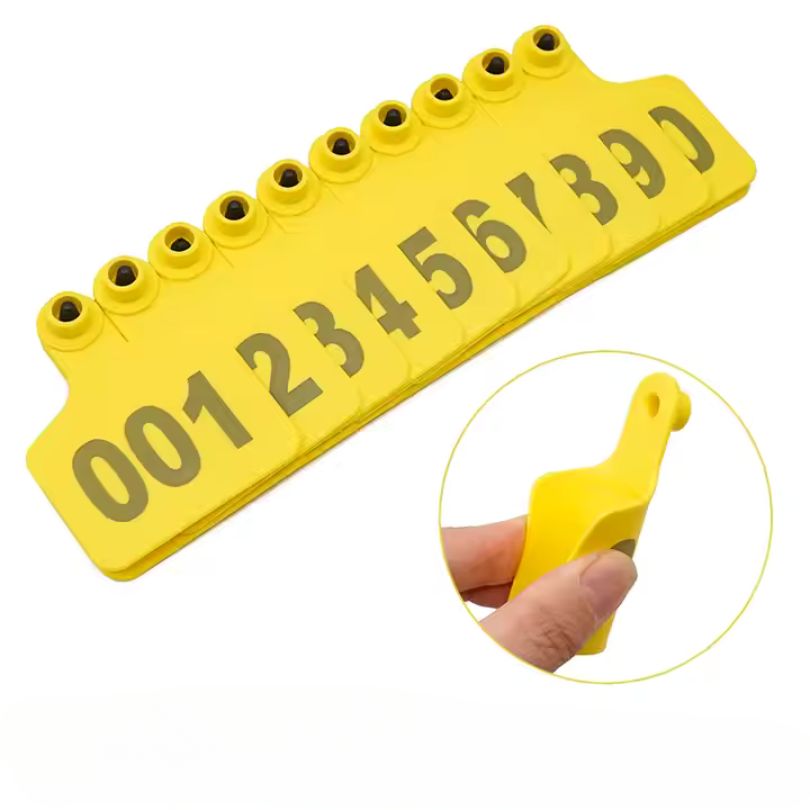
Sestavte čísla pomocí roku narození a pořadí narození
Nejpřímější metodou je změnit rok narození na první část značky a poté přidat pořadí narození telete.
Pokud používáte číslice pro rok, vezmete poslední dvě číslice roku a umístíte je před číslo telete.
Například patnácté tele narozené v roce 2023 se stane 23-015. Při změně roku se pořadí začíná znovu. Takže první tele narozené v roce 2024 se stane 24-001.
To funguje, protože:
- část rok vždy vychází z kalendářního roku
- sekvenční část vždy vychází z počítání telat v daném roce.
Aby byla zachována čitelnost, mnoho farem stanovuje délku sekvence. Například pro pořadí se vždy používají tři číslice. Tak se z 1 stane 001 a z 10 010.
Některá stáda také používají delší, čtyřmístný formát, aby se čísla neopakovala po dlouhá období. Při tomto přístupu se první část čísla posouvá o deset let dopředu, místo aby se začínalo znovu od stejné hodnoty. Například pokud bylo první tele narozené v roce 2011 označeno. 1001, první tele narozené v roce 2021 by se znovu nepoužilo. 1001 ale byl by označen 1501 místo toho. Tím se zachovávají jedinečná čísla až po dobu dvaceti let a snižuje se zmatek, když jsou starší zvířata stále ve stádě. Logika zůstává stejná. Jedna část představuje skupinu ročníků narození a druhá část představuje pořadí narození. Pouze počáteční bod je posunut dopředu, aby se zabránilo překrývání.
Sestavte čísla pomocí mezinárodního písmenného kódu roku
Mnozí výrobci místo zápisu roku číslicemi používají znak mezinárodní písmenný kód roku, který je rovněž přijat hlavními chovatelskými sdruženími a systémy registrace. Systém přiřazuje každému kalendářnímu roku standardní písmenný kód a opakuje se každých 22 let. Například 101. tele narozené v roce 2020 by zemědělci označili jako 101H, přičemž ‘H’ by znamenalo rok 2020. Systém vynechává písmena I, O, Q a V, aby nedošlo k záměně s čísly 1, 0 a U.
Běžně používaná sekvence vypadá takto:
Rok | Dopis |
2020 | H |
2021 | J |
2022 | K |
2023 | L |
2024 | M |
2025 | N |
2026 | P |
2027 | R |
2028 | S |
2029 | T |
2030 | U |
2031 | W |
Sekvence pokračuje v tomto pořadí a opakuje se po celém cyklu.
Pro sestavení čísla značky vezměte:
- písmeno roku narození z tabulky
- pořadí narození telete
Pak je zkombinujte.
Pokud je tele desáté narozené v roce 2025 a graf ukazuje, že rok 2025 se rovná N, značka se změní na N10.
Pokud je tele třetí narozené v roce 2023 a 2023 se rovná L, značka se změní na L03.
Písmeno vždy vychází z tabulky. Číslo vždy pochází z počítání telat v daném roce.
Díky tomuto systému jsou čísla krátká a na štítek se nepíšou celé roky.
Sestavte čísla z čísla matky
V systému založeném na matce se číslo telete vytvoří ze stávajícího čísla krávy. Cílem je zobrazit příbuzenské vztahy přímo na štítku.
Jednou z běžných metod je ponechat základní číslo přehrady a změnit pouze část s rokem.
Pokud je kráva 100M a dopis E představuje rok narození telete, tele se stává 100E:
- 100 pochází od matky
- E pochází z kódu roku.
Další metodou je umístění číslic roku před číslo přehrady.
Pokud je kráva 100 a tele se narodí v roce 2017, může být označeno. 17100:
- 17 pochází z roku narození
- 100 pochází z přehrady.
Některé farmy tento údaj dále zkracují a používají pouze poslední číslici roku.
Pokud se píše rok 2017 a kráva má 100 let, tele se stane 7100:
- 7 pochází z poslední číslice roku.
- 100 pochází z přehrady.
Všechny se řídí stejným pravidlem:
- Část čísla vždy pochází od matky.
- Část čísla vždy pochází z roku narození.
Pokud je jalovice chována pro plemenitbu, obvykle později dostane nové trvalé číslo stáda, aby se čísla v rodině nedublovala napříč generacemi.
Sestavování čísel pomocí skupin nebo dávek
V systémech založených na skupině je číslo sestaveno z kódu skupiny a individuálního počtu.
Nejprve se skupině nebo dávce přiřadí kód, například B1 nebo G3. Poté se spočítají zvířata uvnitř této skupiny.
Například, B2-110 je postaven takto:
- B2 zobrazuje dávku 2.
- 110 zobrazuje stodesáté zvíře v dané dávce.
Tato metoda se často používá, když jsou zvířata řízena jako partie pro krmení, zdravotní programy nebo uvádění na trh.
Sestavte čísla na základě kódu stáda + čísla zvířete
Tento systém kombinuje identifikátor farmy nebo stáda s číslem zvířete.
Například AB-0456 používá AB pro označení farmy nebo stáda a 0456 pro označení jednotlivého zvířete.
Tento formát je užitečný, pokud se zvířata pohybují mezi farmami nebo pokud několik farem používá podobné číselné řady. Kód stáda zabraňuje tomu, aby dvě zvířata měla stejné celé číslo, i když mají stejné individuální ID.
Je také užitečná při prodeji, přepravě a systémech sdílené pastvy, protože samotná značka ukazuje, odkud zvíře pochází.
Celkově, bez ohledu na to, která metoda se použije, je nejdůležitější, aby se pravidlo neměnilo z roku na rok.
Úplné pravidlo číslování vždy odpovídá na tři otázky:
- Odkud pochází rok
- Odkud pochází číslo objednávky
- Odkud pochází rodinná nebo skupinová část
Jakmile jsou tyto tři části pevně stanoveny, je každé číslo značky sestaveno stejným způsobem. To je to, co dělá systém čitelným a užitečným, nikoli velikost čísla nebo barva značky.
Jsou čísla ušních známek skotu mezinárodně standardizována?
Ne, některé části identifikace skotu jsou standardizované, ale mnoho z toho, co vidíte vytištěné na štítku, standardizované není.
Tištěná čísla nejsou jednotným globálním standardem
Pro běžné vizuální ušní známky neexistuje žádné jednotné mezinárodní pravidlo, které by určovalo, jak musí vytištěné číslo vypadat. Farma si může zvolit vlastní formát a různé země mají také své vlastní oficiální formáty.
Oficiální vládní programy mohou být standardizovány uvnitř země.
V mnoha zemích se úřední identifikační značky řídí pevným národním formátem. Tento formát je v dané zemi jednotný a používá se pro vysledovatelnost, přesuny zvířat a kontrolu nemocí.
Například ve Spojených státech se úřední ušní známky řídí specifickými národními formáty, jako je systém 840 Animal Identification Number (AIN) a kovové známky vydávané jednotlivými státy.
Značky 840 začínají číslem “840”, které označuje kód země USA, a následuje jedinečná řada číslic přiřazených zvířeti. Tato čísla jsou stanovena národním programem sledovatelnosti v USA.
Systémy RFID jsou nejblíže mezinárodní standardizaci.
Štítky RFID používají elektronické číslo uložené v čipu. Toto elektronické ID je navrženo tak, aby bylo jedinečné a čitelné skenery. V praxi je strana RFID mnohem standardizovanější než běžná tištěná čísla, protože zařízení RFID a databáze potřebují konzistenci, aby fungovaly v různých systémech.
To je také důvod, proč mají štítky RFID často dlouhý kód, který vypadá spíše jako sériové číslo než jako štítek vhodný pro zemědělce. Jsou určeny především pro stroje.
Tipy pro vytvoření systému číslování ušních známek skotu
Systém číslování by měl být navržen podle toho, jak se se zvířaty na farmě skutečně zachází, ne jen podle toho, jak se vedou záznamy. V praxi se různá zvířata označují různými způsoby v závislosti na jejich úloze ve stádě, na tom, jak dlouho v něm zůstanou a jak často je třeba jejich čísla odečítat.
1. Rozhodněte, co má číslo zobrazovat
Prvním krokem je volba toho, co má číslo značky představovat. Většina systémů kóduje pouze jednu nebo dvě věci, například rok narození, pořadí narození, číslo matky nebo kód skupiny. Snaha zahrnout příliš mnoho informací způsobuje, že číslo je dlouhé a špatně čitelné.
Pokud je například věk nejdůležitějším faktorem pro třídění zvířat, pak by číslo mělo obsahovat ukazatel roku. Pokud je důležitější sledování rodiny, pak by číslo mělo být sestaveno z čísla matky. Pokud je skot veden v partiích, pak by číslo mělo obsahovat kód skupiny nebo šarže.
2. Stanovte odlišná pravidla pro krávy, býky a telata.
Plemenným kravám se obvykle dávají velké, dlouhotrvající štítky s jednoduchými čísly. Mnoho stád čísluje krávy postupně od 1 až po velikost stáda. Pokud má stádo 100 krav, mohou být označeny čísly 1 až 100. Cílem je stabilita. Tato čísla by měla krávě zůstat po mnoho let, takže na čitelnosti záleží více než na krátkodobém pohodlí.
Býci jsou často číslováni odděleně od krav a označováni jinou barvou visačky. Například býci mohou být označeni čísly 1 a 2 na modrých štítcích, zatímco krávy používají růžové štítky. To usnadňuje jejich rychlou identifikaci v terénu a zabraňuje záměně čísel býků do pořadí krav.
S telaty se obvykle zachází jinak, protože mnohá z nich budou později prodána nebo znovu označena. Běžnou praxí je připravit před otelením značky velikosti telete očíslované od 1 do 100, přičemž od každého čísla jsou k dispozici dvě sady. Při narození se tele označí stejným číslem jako jeho matka. Pokud se krávě 51 narodí tele, je označeno číslem 51. To usnadňuje propojení telete a krávy během kojení a raného managementu bez nutnosti kontroly záznamů.
Uchovávání dvou sad štítků pro telata je důležité pro případ ztráty štítku nebo narození dvojčat. Předejde se tak zpoždění a zachová se jednotné číslování.
3. Naplánujte, co se stane, když se z telat stanou náhradní zvířata
Na konci roku se značky často odstraňují a čistí, aby mohly být znovu použity. Telata, která jsou prodána, si ponechávají pouze svou manažerskou značku. Telata, která jsou ponechána jako náhradníci, jsou obvykle znovu označena velkými trvalými štítky a zařazena do systému číslování dospělých zvířat.
Například pokud má stádo krávy očíslované od 1 do 100 a je ponechána jalovice, může se stát krávou 101. Pokud se chová tele, může se stát býkem 3. Tím se udržuje čistý systém dospělých zvířat a zabraňuje se tomu, aby čísla telat zůstala v užívání trvale.
4. Rozhodněte, jak se má rok zobrazit v číslech telat.
Mnoho chovatelů uvádí rok narození přímo v číslech telat. Běžnou metodou je umístění číslic roku na začátek čísla.
Například:
- 2601 znamená první tele narozené v roce 2026.
- 2655 znamená tele narozené krávě 55 v roce 2026.
Zde 26 pochází z roku 2026 a 01 nebo 55 pochází z pořadí narození nebo čísla matky. Díky tomu je věk viditelný i bez nahlížení do knihy rekordů.
Některá stáda používají místo číslic mezinárodní písmenný kód roku. Každému roku odpovídá jedno písmeno na základě pevně stanovené tabulky (jak je uvedeno výše).
5. Definujte, jak se počítá pořadí narození
Dalším rozhodnutím je způsob započítávání telat v rámci roku nebo skupiny. Většina systémů každý rok obnovuje pořadí a počítá se nahoru podle toho, jak se rodí telata.
Aby byla čísla čitelná, mnoho zemědělských podniků stanovuje délku této části. Například použití tří číslic znamená, že první tele se vždy píše jako 001 místo 1 a desáté tele jako 010 místo 10. Tím se zachová stejná šířka všech značek a zabrání se záměně malých a velkých čísel.
6. Použijte velikost, barvu a umístění štítků jako součást systému.
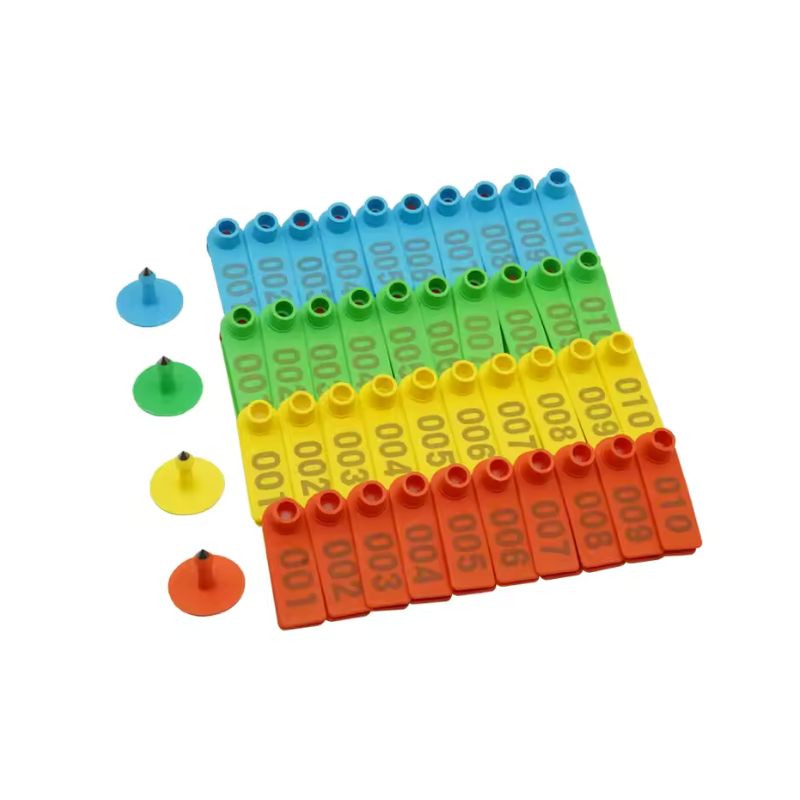
Systém číslování funguje lépe, pokud jej podporuje fyzická konstrukce štítků. Dlouhodobě chovaná zvířata by měla používat velké visačky s čísly vytištěnými laserem namísto ručně psaného inkoustu, který bledne. Telata, která zůstanou v chovu jen krátce, mohou používat menší visačky.
Mnoho výrobců také přiděluje:
- jedna barva pro krávy
- další barva pro býky
- a různé barvy pro telata
Někteří umísťují vizuální značky do pravého ucha a elektronické nebo insekticidní značky do levého ucha. Jiní označují zvířata dvakrát, přičemž jedna značka je určena pro číslo managementu a druhá pro název ranče a telefonní číslo. Tato fyzická pravidla by měla odpovídat logice systému číslování, aby bylo možné zvířata snadno třídit a rozpoznat.
7. Přemýšlejte o prodeji zvířat dopředu
Při prodeji zvířat si většina provozů ponechává na zvířeti visačku s číslem managementu a umožňuje ponechat i vlastní visačku ranče. Tím se zabrání přerušení záznamu a zároveň se kupujícímu umožní přidat později vlastní identifikaci.
Pokud je systém číslování dobře navržen, může zvíře opustit stádo, aniž by vznikly mezery nebo zmatek ve zbývajícím pořadí.
8. Oddělte logiku rodiny nebo skupiny od logiky roku.
Pokud systém používá číslování podle hrází nebo skupin, musí být pravidla jasně oddělena.
- V systémech založených na matce pochází část čísla vždy od matky a část od roku narození.
- V systémech založených na skupině pochází část čísla vždy z kódu skupiny a část vždy z počtu jednotlivců.
Je třeba se vyvarovat míchání významů ve stejné pozici. Číslice, která u jednoho zvířete znamená “rok”, by neměla u jiného znamenat “číslo krávy”. Každá část čísla musí vždy znamenat stejný typ informace.
9. Zapište si pravidlo a dodržujte ho
Dobrý systém číslování má jedno jasné pravidlo pro:
- jak se číslují krávy
- jak se číslují telata
- jak jsou roky kódovány
- jak jsou náhrady znovu označeny
Jakmile je toto pravidlo jednou stanoveno, měli by se jím všichni, kdo používají značky, pokaždé řídit stejně. Systém funguje pouze tehdy, pokud číslo znamená pro každé zvíře vždy totéž.
Závěr
Čísla ušních známek skotu jsou pouze jednou částí mnohem rozsáhlejšího identifikačního systému. Existují také metody, jako je tetování, cejchování a elektronická identifikace, které však nejsou založeny na viditelném číslování stejným způsobem a slouží jiným účelům. Ušní známky zůstávají nejpraktičtějším nástrojem pro každodenní řízení stáda, protože jejich čísla lze vidět a pochopit okamžitě v terénu.
Nejdůležitější není samotný štítek, ale logika čísla, které je na něm vytištěno. Dobře navržený systém číslování umožňuje zemědělcům na první pohled rozpoznat informace o věku, rodině nebo skupině a propojit dané zvíře s přesnou evidencí. Pokud je systém konzistentní a jasně definovaný, číslo na ušní známce se stává více než jen štítkem. Stává se identitou zvířete v rámci stáda.
Proč je společnost JIA Tech spolehlivým výrobcem ušních štítků RFID a čteček čipů pro zvířata?

Společnost JIA Tech se specializuje na výrobu ušních známek RFID a čteček RFID pro identifikaci hospodářských zvířat a systémy řízení zdraví. Naše výrobky jsou navrženy tak, aby splňovaly normy ISO a podporovaly dlouhodobé používání v reálných podmínkách farmy. Díky stabilnímu kódování čipů, konzistentní kvalitě výroby a podpoře programů sledovatelnosti hospodářských zvířat poskytuje společnost JIA Tech spolehlivá řešení identifikace skotu, ovcí, koz a prasat. Spolupracujeme přímo s farmami, systémovými integrátory a programy pro chov hospodářských zvířat, abychom dodali zařízení RFID, která v polních podmínkách fungují konzistentně a hladce se integrují se stávajícími čtecími a databázovými systémy.
Hledáte spolehlivého dodavatele nebo cenovou nabídku pro svůj projekt? Kontaktujte společnost JIA Tech a prodiskutujte své požadavky na ušní štítky RFID a čtečky čipů pro zvířata.